

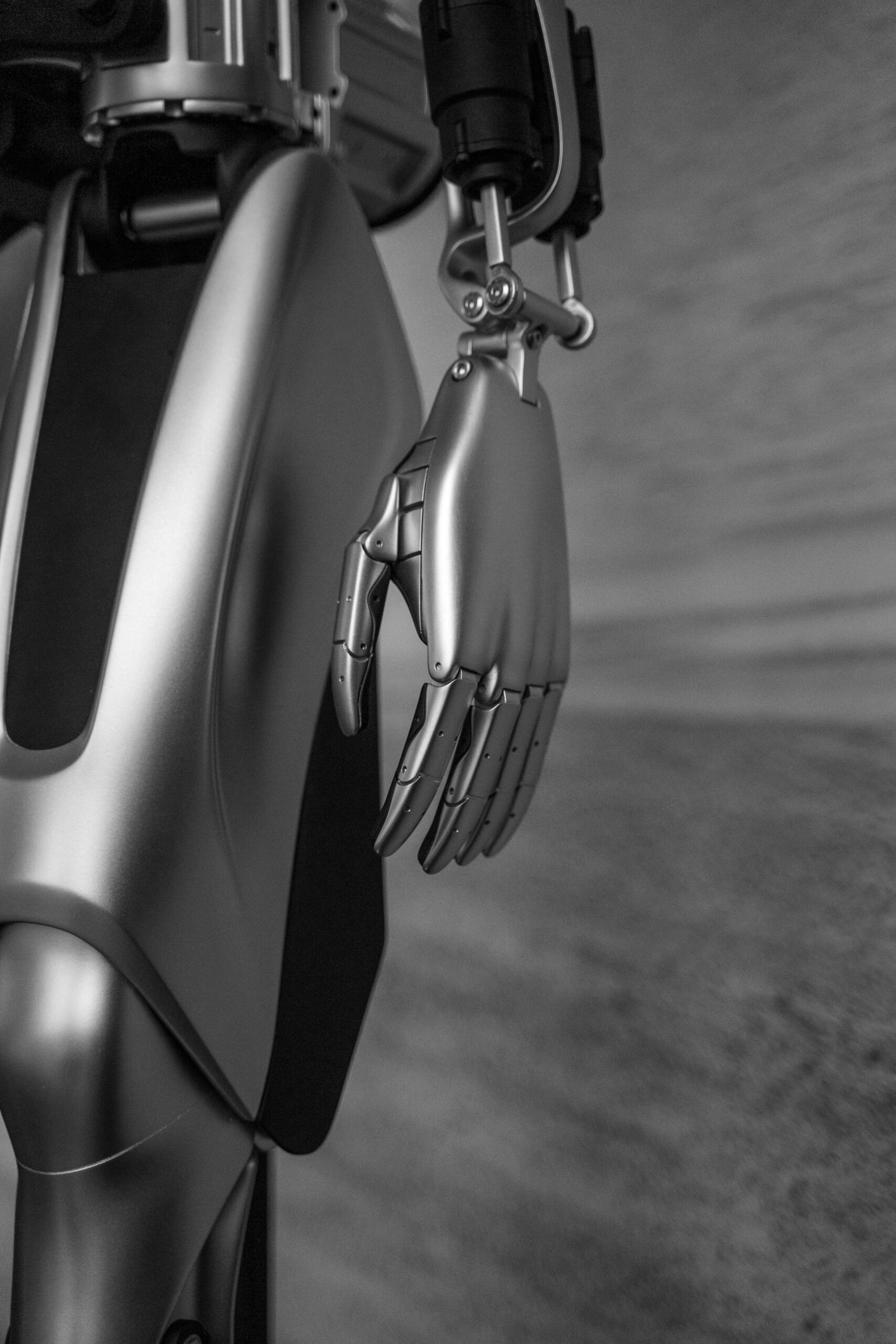
AI Criminal Liability: A self-driving car runs a red light and kills a pedestrian. An AI-powered hiring tool systematically discriminates against thousands of applicants. A medical diagnosis algorithm misreads critical data, and a patient dies from the wrong treatment. These aren’t science-fiction scenarios anymore. They’re happening — or could happen — right now. And every time something like this occurs, the same uncomfortable question surfaces: Who is actually responsible? The law was built around a simple assumption — people commit crimes. A person forms intent, takes action, and causes harm. AI Criminal Liability follows a fairly clear path from wrongdoing to accountability. But when an AI system is involved, that path gets complicated fast. The machine acted. But the machine didn’t think — at least not the way humans do. So where does responsibility land? This article walks through the foundational models that legal scholars, lawmakers, and courts are using to think about criminal liability involving AI — and why getting this right matters enormously for all of us.
The Foundational Challenge: Intent Without a Mind

Before we get into the specific models, it helps to understand why AI creates such a headache for AI Criminal Liability law in the first place.Criminal liability traditionally requires two elements: a guilty act (actus reus) and a guilty mind (mens rea). You did something harmful, and you meant to do it — or were at least reckless or negligent about it. AI systems can clearly satisfy the first element. They do things. They make decisions, take actions, and produce outcomes, sometimes harmful ones. But the second element? That’s where things fall apart. An AI doesn’t have intentions. It doesn’t experience malice, recklessness, or even genuine negligence in any human sense. It optimizes. It predicts. It executes based on the patterns in its training data and the parameters set by its creators. When it causes harm, it’s not because it chose to. It’s because something in its design, training, or deployment went wrong — or because the situation it encountered was something no one anticipated. That gap between action and intent is the central tension running through every model of AI criminal liability.criminally liable.
Model One: Direct Liability — The AI as the Actor
One approach is to treat the AI system itself as a legal actor capable of bearing liability. If the machine caused the harm, make the machine responsible.
This sounds simple until you realize that holding an AI Criminal Liability raises immediate practical problems. You can’t put an algorithm in prison. You can’t fine a neural network. And without legal personhood — the recognized status that allows entities like corporations to be sued — an AI has no standing in court at all.
Some scholars have proposed creating a new legal category: electronic personhood. Under this framework, sufficiently autonomous AI systems could be registered, could hold assets, and could be sued or prosecuted in a limited sense. The European Parliament floated this idea back in 2017. It remains deeply controversial. Critics argue it lets the actual humans — the developers, the companies, the investors — off the hook by pointing at a machine that can’t truly be held accountable in any meaningful way.
For now, pure direct liability for AI systems is largely theoretical. But the debate forces us to take seriously just how autonomous some AI systems are becoming.
Model Two: Derivative Liability — Following the Chain Back to Humans
Far more practical is the concept of derivative or vicarious AI Criminal Liability. Rather than treating the AI as responsible, this approach traces the harm back through the chain of human actors who created, controlled, or deployed it.
Think of it like an employer-employee relationship. If an employee commits a harmful act in the course of their work, the employer can be held responsible — even if the employer didn’t directly order that specific act. The same logic can apply to AI. The developer who built the system, the company that deployed it, and the operator who ran it without proper oversight all become part of a liability chain.
This model has real traction in legal thinking precisely because it keeps accountability in human hands. The questions it asks are practical ones: Who designed this system? Who trained it on what data? Who decided to deploy it in this context? Who was monitoring it? Each of these actors may carry a share of liability proportional to their role and their knowledge of the risks involved.
Model Three: Product Liability and Negligence
Another major approach borrows from product AI Criminal Liability law. When a manufactured product causes harm due to a defect — a car with faulty brakes, a drug with undisclosed side effects — the manufacturer can be held liable regardless of whether they intended the harm. The product was unsafe. They put it in the world. That’s enough.
Applied to AI, this framework asks whether the system had a design defect (the fundamental way it was built was dangerous), a manufacturing defect (something went wrong in the specific implementation), or a failure to warn (users weren’t adequately informed of the system’s limitations or risks).
Negligence-based liability sits alongside this. It asks: Did the developer, deployer, or operator fail to exercise reasonable care? Was the risk foreseeable? A company that deploys a facial recognition system knowing it has a documented high error rate with darker-skinned faces — and deploys it in a law enforcement context anyway — may face serious negligence liability if a wrongful arrest results.
Foreseeability is a key concept here. Courts don’t expect developers to predict every possible outcome. But they do expect them to anticipate reasonably obvious risks and take steps to prevent them.
The Outer Circles: Expanding the Web of Accountability
Here’s where it gets particularly interesting. Criminal and civil liability for AI harm rarely stops at the immediate developer. It extends outward through what we might call outer circles of actors — each with their own degree of connection to the harm.
Developers and researchers sit closest to the technology itself. They make choices about architecture,AI Criminal Liability training data, and performance benchmarks. When bias is baked in, when safety testing is skipped, or when known vulnerabilities are ignored, they may bear significant responsibility.
Deployers and operators make the decision to use AI in specific real-world contexts. A hospital that adopts a diagnostic AI tool without proper clinical validation, or a bank that automates lending decisions without monitoring for discriminatory patterns, takes on substantial AI Criminal Liability. They don’t need to understand every line of code to be responsible for how they choose to use the technology.
Companies and corporate entities face their own layer of accountability. Through corporate AI Criminal Liability, an organization can be held responsible for the collective failures of its employees and systems — particularly when internal culture pushed for speed over safety or profit over caution.
Regulators and governments occupy an outer ring. When regulatory frameworks are absent, outdated, or unenforced, they may bear a kind of systemic accountability. This isn’t usually AI Criminal Liability in the traditional sense, but it’s part of the broader accountability structure that society uses to manage risk.
The Gaps That Still Need Filling
None of these models is perfect. Each leaves accountability gaps that real-world cases are already exposing.
One persistent problem is the black box issue. Many advanced AI systems — particularly deep learning models — operate in ways that even their creators can’t fully explain. When harm occurs, establishing causation becomes incredibly difficult. Did the AI cause the harm? Did the training data? The deployment environment? Human error? Untangling these threads is a genuine challenge for courts that were never designed to handle it.
Another gap involves the distribution of harm. AI systems often cause diffuse harms — small injuries spread across millions of people — rather than single dramatic events. Traditional AI Criminal Liability law is built around identifiable victims and clear causal links. It doesn’t handle statistical harm well.
Finally, there’s the accountability gap that emerges when multiple parties each bear a partial responsibility but no single party bears full responsibility. The developer did their best. The deployer followed the manual. The operator flagged concerns but was overruled. Everyone was a little responsible, and somehow no one was fully responsible. That outcome feels deeply unsatisfying — and dangerous.

A Closing Thought (Conclusion)
The question of who is responsible when AI Criminal Liability causes harm is not an abstract legal puzzle. It has real consequences for real people — the pedestrian in the crosswalk, the job applicant unfairly rejected, the patient who got the wrong diagnosis. Getting the liability framework right matters.
We don’t need to solve every philosophical question about AI consciousness or moral agency to make progress. What we need is a clear-eyed commitment to keeping humans accountable for the systems they build and deploy. The outer circles of responsibility aren’t a loophole — they’re a feature. They reflect the reality that powerful technology is always embedded in human choices, human institutions, and human values.
The law will keep evolving. But the core principle is simple enough: if you build it, train it, deploy it, or profit from it, you don’t get to walk away when it goes wrong. legal and ethical frameworks. The goal is not only to assign blame but to ensure safety.
[…] AI in the Military: Artificial Intelligence (AI) is rapidly changing the world, and one of the most significant areas of transformation is the military sector. From advanced surveillance systems to autonomous weapons and predictive analytics, AI in the military is redefining how nations prepare for and conduct warfare. Governments around the globe are investing billions of dollars in AI-driven defense technologies to enhance national security, improve operational efficiency, and gain strategic advantages. […]