

Digital Twin in Healthcare: The healthcare industry is evolving rapidly, driven by emerging technologies that aim to make medical systems more precise, predictive, and patient-centered. Among these innovations, the concept of the “digital twin” has gained significant attention. Originally used in engineering and manufacturing, digital twin technology is now making its way into healthcare, offering a transformative approach to diagnosis, treatment, and system management.
With the support of advanced AI tools like ChatGPT developed by OpenAI, researchers and practitioners can now generate structured literature reviews, synthesize complex findings, and explore the evolving role of digital twins in medicine. This article presents a humanized literature-style overview of digital twin technology in healthcare, its applications, benefits, challenges, and future potential.
Understanding Digital Twin Technology in Healthcare

A digital twin is a virtual representation of a physical object, system, or individual that is continuously updated with real-time data. In healthcare, a digital twin can represent a patient, an organ, or even an entire hospital system.
The concept involves integrating data from various sources such as electronic health records, wearable devices, imaging systems, and genetic profiles. This data is then used to create a dynamic model that mirrors the real-world entity. The model can simulate different scenarios, predict outcomes, and support clinical decision-making.
In simpler terms, a digital twin acts like a “living simulation” of a patient’s health, allowing doctors to test treatments and interventions virtually before applying them in real life.
Role of AI and ChatGPT in Literature Review
Conducting a literature review on a complex topic like digital twin in healthcare can be time-consuming. This is where AI tools such as ChatGPT come into play. These tools can analyze large volumes of academic papers, identify key themes, and summarize findings in a coherent manner.
AI-generated literature reviews are not just about summarization—they also help in identifying research gaps, comparing methodologies, and highlighting emerging trends. For students, researchers, and professionals, this significantly reduces the effort required to stay updated with the latest developments.
However, it is important to remember that while AI can assist in generating content, critical thinking and human oversight remain essential to ensure accuracy and depth.
Applications of Digital Twin in Healthcare
1. Personalized Medicine
One of the most promising applications of digital twin technology is in personalized medicine. Each patient has unique biological characteristics, and digital twins allow healthcare providers to tailor treatments accordingly.
For instance, a digital twin of a patient’s heart can be used to simulate how it would respond to different medications or surgical procedures. This enables doctors to choose the most effective treatment with minimal risk.
2. Disease Prediction and Prevention
Digital twins can analyze historical and real-time data to predict potential health issues. For example, by monitoring vital signs and lifestyle data, a digital twin can identify early signs of chronic diseases such as diabetes or cardiovascular conditions.
This predictive capability shifts healthcare from a reactive model to a proactive one, where diseases can be prevented rather than treated after they occur.
3. Surgical Planning and Training
Surgeons can use digital twins to practice complex procedures in a virtual environment. By simulating a patient’s anatomy, doctors can plan surgeries with greater precision and reduce the likelihood of complications.
Medical students and trainees can also benefit from this technology, as it provides a safe and interactive learning environment.
4. Hospital Management and Operations
Digital twins are not limited to individual patients. They can also be used to model entire healthcare systems. Hospitals can create digital twins of their operations to optimize workflows, manage resources, and improve patient care.
For example, a hospital can simulate patient flow to reduce waiting times and improve efficiency.
Benefits Highlighted in Literature
The literature on digital twin technology in healthcare consistently highlights several key benefits:
- Improved Accuracy: Real-time data integration enhances diagnostic precision.
- Cost Efficiency: Virtual simulations reduce the need for trial-and-error treatments.
- Enhanced Patient Outcomes: Personalized and predictive care leads to better health results.
- Better Decision-Making: Clinicians can test multiple scenarios before making decisions.
These benefits make digital twin technology a valuable tool in modern healthcare systems.
Challenges and Limitations
Despite its potential, digital twin technology faces several challenges:
Data Privacy and Security
Healthcare data is highly sensitive, and the use of digital twins requires strict data protection measures. Ensuring patient confidentiality is a major concern.
Data Integration
Creating an accurate digital twin requires data from multiple sources, which can be difficult to integrate due to differences in formats and standards.
High Implementation Costs
Developing and maintaining digital twin systems can be expensive, limiting their adoption in resource-constrained settings.
Ethical Considerations
The use of predictive models raises ethical questions. For example, how should healthcare providers act on predictions about future illnesses? And how do we ensure that these predictions are fair and unbiased?
Research Trends and Future Directions
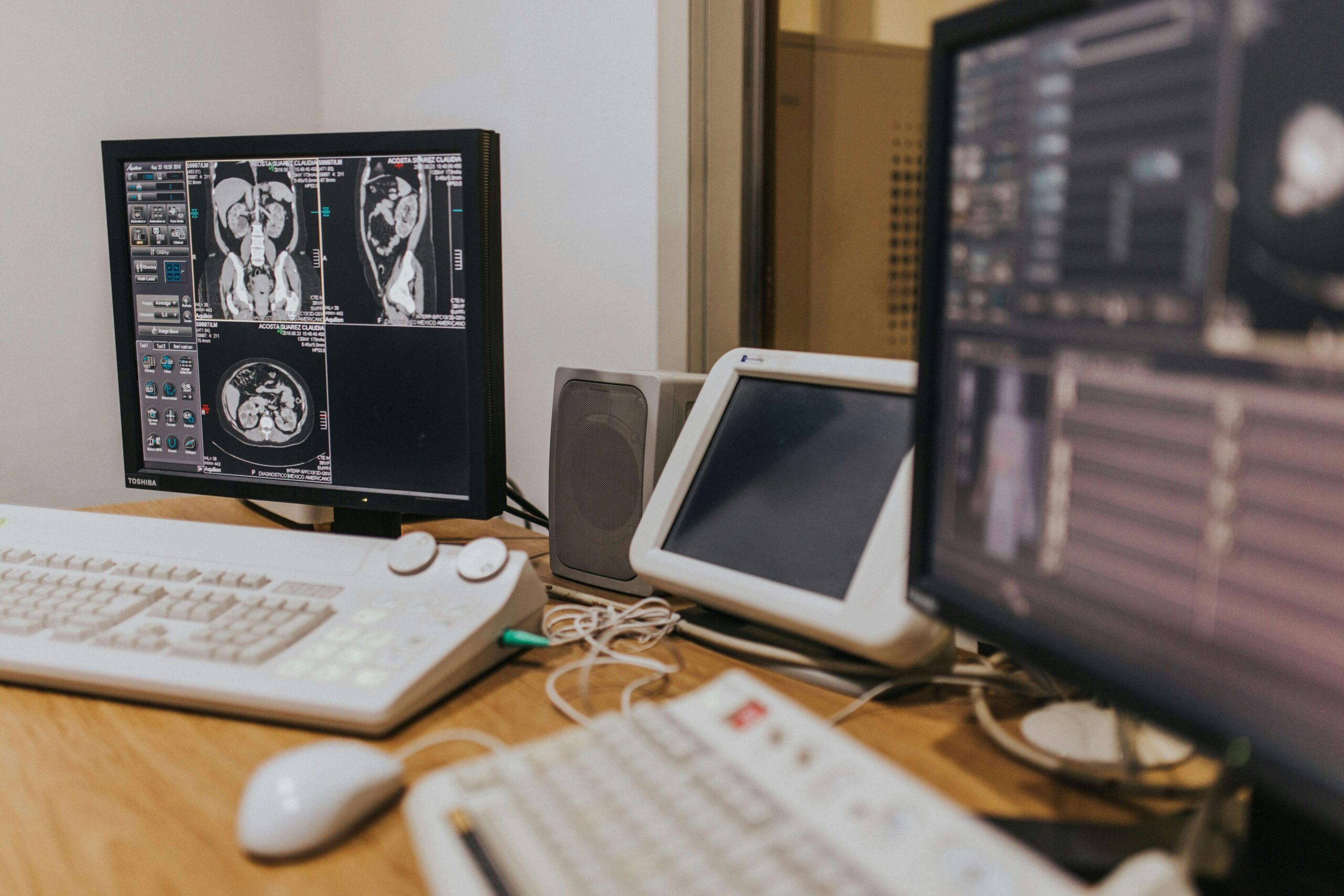
The literature indicates that digital twin technology is still in its early stages in healthcare, but it is rapidly evolving. Future research is likely to focus on:
- Integration with AI and Machine Learning: Enhancing predictive capabilities.
- Real-Time Monitoring: Using IoT devices for continuous data updates.
- Scalability: Making digital twin systems accessible to more healthcare providers.
- Regulatory Frameworks: Establishing guidelines for safe and ethical use.
AI tools like ChatGPT will continue to play a role in synthesizing research and supporting innovation in this field.
Human Perspective: Bridging Technology and Care
While digital twin technology is highly technical, its ultimate goal is deeply human—to improve patient care. Behind every data point is a person with unique needs, emotions, and experiences.
Healthcare professionals must balance technological advancements with empathy and compassion. Digital twins should not replace human interaction but rather enhance it by providing better insights and support.
Conclusion
The integration of digital twin technology into healthcare represents a significant step toward a more intelligent and patient-centered system. By combining real-time data, advanced simulations, and AI-driven analysis, digital twins have the potential to revolutionize how we understand and manage health.
AI tools like ChatGPT are making it easier to explore this complex field through automated literature reviews and knowledge synthesis. However, the success of digital twin technology depends on addressing challenges related to data, ethics, and implementation.
As research continues to grow, digital twins may become a standard component of healthcare systems worldwide—bringing us closer to a future where medicine is not only reactive but predictive, personalized, and precise.