

Artificial intelligence is changing how food is produced, analyzed, processed, distributed, and consumed. AI in food science combines machine learning, computer vision, predictive analytics, sensors, and other technologies to solve problems across the food system.
Food scientists can use Artificial intelligence to analyze complex datasets, identify patterns, predict quality issues, detect potential food-safety risks, optimize production, and support new product development. Recent research also highlights AI’s growing role in personalized nutrition, food manufacturing, nondestructive testing, and food-health research.
The technology is particularly valuable because modern food systems generate large amounts of data—from farm and factory sensors to laboratory measurements, supply-chain records, and consumer behavior.
But AI is not a replacement for food scientists, nutrition professionals, regulators, or other experts. Its strongest role is to augment human expertise with faster analysis, prediction, and decision support.
How AI Is Used in Food Science

Data Analytics and Machine Learning
Data is the foundation of many AI applications in food science. Machine learning models can process large datasets and identify relationships that may be difficult to detect manually.
In food production, these models can support quality prediction, process optimization, demand forecasting, contamination analysis, and predictive maintenance. Research reviews have identified machine learning applications ranging from contaminant and adulterant detection to food grading and nutritional analysis.
For example, manufacturers can combine historical production data with temperature, humidity, processing time, and sensor readings to identify conditions associated with quality problems.
Computer Vision and Smart Inspection
Computer vision allows AI systems to analyze images and video for food inspection and quality control.
AI-powered cameras can help classify products, identify visible defects, evaluate color and shape, and detect abnormalities on production lines. Combined with other sensing technologies, computer vision can contribute to faster and more consistent inspection.
This is especially useful when food manufacturers need to inspect large volumes of products where manual inspection can be slow or inconsistent.
Sensors, Robotics, and Automation
AI becomes even more powerful when combined with sensors, robotics, and connected equipment.
Smart sensors can continuously collect information about temperature, humidity, product conditions, or processing environments. AI can then analyze these signals and identify unusual patterns.
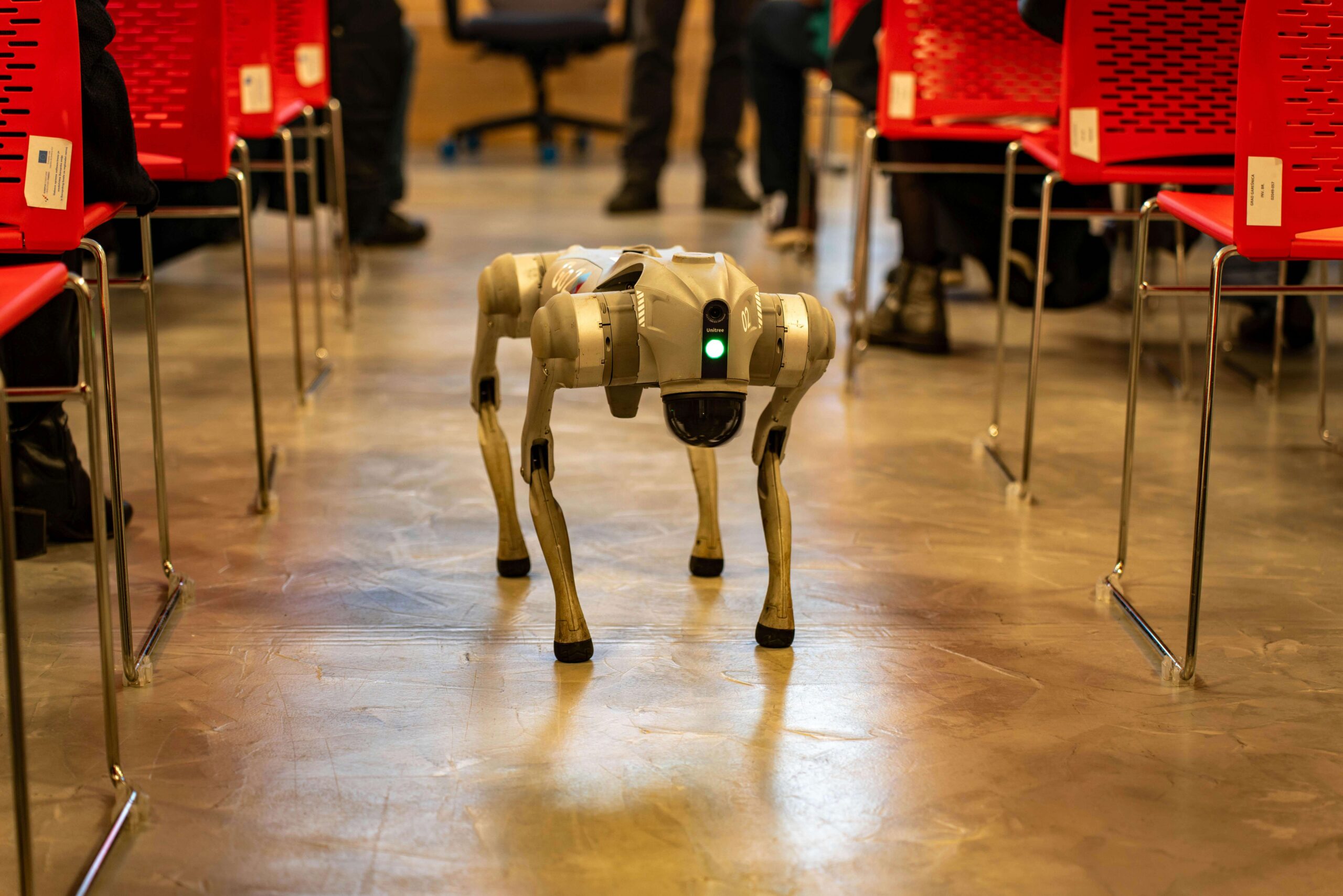
Robotic systems can use AI to support sorting, packaging, handling, and other repetitive manufacturing tasks. This combination creates opportunities for more automated and responsive food-processing environments.
Major Applications of AI in Food Science
AI for Food Safety and Quality Control
Food safety is one of the most important applications of AI in the food sector. AI can support pathogen detection, food fraud identification, outbreak surveillance, risk forecasting, laboratory analysis, and inspection prioritization.
The FAO reports that AI is already being explored across the food-safety continuum, including machine learning for pathogen detection, predictive surveillance, emerging-issue detection, and risk-based decision-making.
AI can therefore help move food-safety management from a mainly reactive approach toward more predictive and data-driven processes. However, scientific validation and human oversight remain essential.
AI for Personalized Nutrition
AI is also expanding the possibilities for personalized nutrition. Instead of relying only on general dietary recommendations, AI systems can analyze individual information such as dietary patterns, lifestyle factors, health measurements, and other relevant data.
Recent research describes AI-supported nutrition systems capable of generating adaptive dietary recommendations and analyzing biological and lifestyle information for more individualized approaches.
This area has significant potential, but personalized nutrition also requires careful handling of sensitive health data and appropriate professional oversight.
AI for Food Product Development
Food companies can use AI to accelerate product development by analyzing ingredients, nutritional properties, flavor profiles, consumer preferences, and product-performance data.
Instead of testing every possible formulation manually, researchers can use computational models to identify promising combinations and narrow the number of physical experiments required.
AI can also support the development of plant-based foods, alternative proteins, functional foods, and products designed around specific nutritional or consumer requirements.
Benefits and Challenges of AI in Food Science
Improving Efficiency and Reducing Food Waste
One major advantage of AI is its ability to process information quickly and support more efficient decisions.
Predictive models can help manufacturers identify process problems earlier, forecast demand, optimize inventory, and reduce unnecessary waste. AI can also support agricultural decisions involving irrigation, crop monitoring, and resource management.
Across the broader food system, these capabilities can contribute to more efficient use of raw materials, energy, water, and labor.
Supporting Sustainability and Supply Chains
AI can help improve the efficiency and resilience of food supply chains by combining information from multiple sources.
Demand forecasting can help businesses better match production with consumer needs, while predictive analytics can support inventory and logistics decisions. AI-enabled monitoring can also help identify disruptions before they become larger operational problems.
Recent reviews describe AI applications across food production, supply-chain management, waste reduction, and sustainable food-system development.
For SmartMindAI, this is a strong internal-link opportunity to related content about AI in agriculture, AI and sustainability, and AI in supply chain management.
Data Quality, Cost, and Technical Barriers
AI also comes with important limitations. Machine learning systems depend heavily on reliable and representative data. Poor-quality, incomplete, or biased datasets can produce unreliable results.
FAO’s recent work on AI for food safety specifically emphasizes data availability and quality as major challenges, along with the need for stronger AI and data-management literacy.
Businesses may also face significant costs related to computing infrastructure, sensors, software integration, cybersecurity, training, and specialist talent. Smaller organizations can find these requirements particularly challenging.
The Future of AI in Food Science
Multimodal AI and Advanced Food Analysis
The next generation of AI in food science is likely to combine multiple types of information rather than relying on a single dataset.
Recent 2026 research describes growing interest in multimodal data integration across food, nutrition, and health research, including food composition data, health information, imaging, spectroscopy, and other analytical techniques.
This could allow AI systems to connect laboratory measurements, images, sensor information, nutritional data, and consumer information to produce more comprehensive insights.
Explainable and Responsible AI
As AI becomes more involved in food safety, nutrition, and scientific research, transparency will become increasingly important.
Researchers and regulators need to understand how models reach important conclusions, particularly when those conclusions could affect consumer safety or health. Explainable AI, better validation, privacy-preserving methods, and stronger governance can help address these concerns.
FAO emphasizes that AI in food safety should be supported by good data, strong governance, scientific expertise, and human oversight rather than being treated as an autonomous replacement for experts.
Smarter, More Sustainable Food Systems
The long-term opportunity is to connect AI across the entire food ecosystem—from agriculture and laboratories to manufacturing, logistics, retail, and nutrition.
AI could help create food systems that respond faster to changing demand, detect safety risks earlier, reduce waste, improve resource efficiency, and support more personalized food choices.
However, the future of AI in food science should focus not simply on automation, but on responsible innovation that combines technology with scientific validation and human judgment.
Conclusion
AI in food science is moving from an emerging concept to a practical technology with applications across food safety, quality control, manufacturing, nutrition, agriculture, and product development.
Machine learning can identify patterns in complex datasets, computer vision can support automated inspection, predictive analytics can improve operations, and AI-driven systems can help researchers explore new food and nutrition solutions. Recent research shows that these applications are expanding rapidly across the food-to-health ecosystem.
At the same time, AI adoption requires high-quality data, technical expertise, privacy protections, transparency, and human oversight. The most valuable future applications will therefore be those that combine AI capabilities with the expertise of food scientists, nutrition professionals, engineers, manufacturers, and regulators.