

Artificial intelligence is transforming chemistry by helping scientists analyze data, predict molecular behavior, and automate laboratory processes. From discovering new materials to improving chemical reactions, AI is making research faster, more accurate, and more efficient. AI in Chemistry is also supporting education by helping students understand complex concepts through intelligent learning tools. As AI technology advances, it is becoming an essential part of modern chemical research and innovation.
Understanding Basic Chemistry
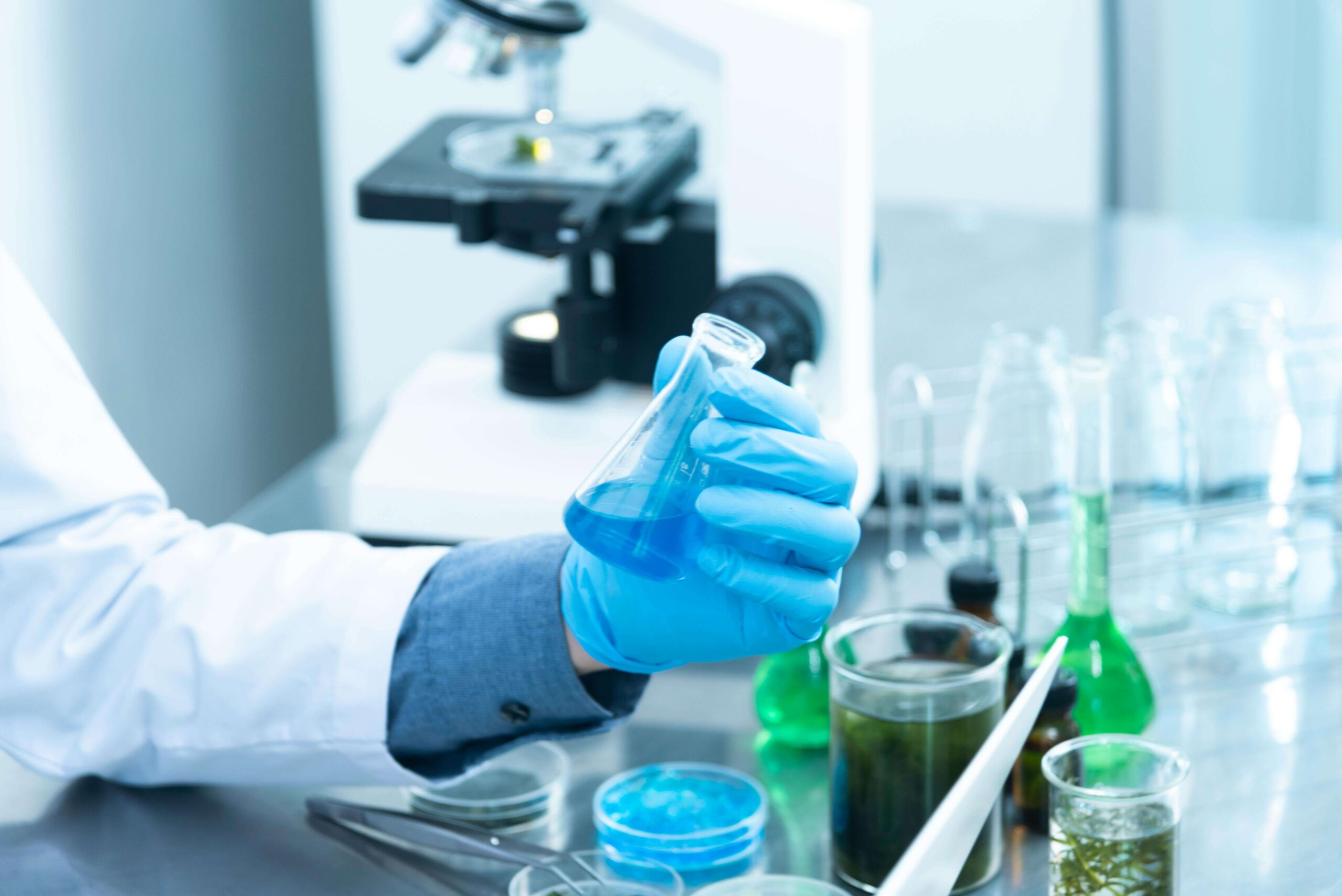
Before exploring the role of AI, it is important to understand the foundations of basic chemistry.
Chemistry studies the composition, structure, properties, and transformations of matter. At its core, chemistry explains how atoms combine to form molecules and how chemical reactions occur.
Chemistry is fundamental to understanding many processes in nature and technology. From the air we breathe to the medicines we take, chemical reactions shape our everyday lives.
Basic chemistry typically includes topics such as:
-
Atomic structure
-
Chemical bonding
-
Periodic table trends
-
Chemical reactions
-
Acids and bases
-
Thermodynamics
-
Reaction kinetics
Traditionally, students learn these concepts through textbooks, laboratory experiments, and theoretical calculations. However, AI is now enhancing how these topics are studied and understood.
AI as a Tool for Chemical Research
Modern chemistry research generates massive amounts of data. Experiments produce complex datasets involving molecular structures, reaction conditions, and chemical properties.
Analyzing this data manually can be extremely time-consuming. AI algorithms are capable of analyzing large datasets quickly and identifying patterns that might be difficult for humans to detect.
For example, machine learning models can predict the behavior of molecules under certain conditions. These predictions help scientists design experiments more efficiently and reduce the trial-and-error process commonly used in traditional laboratory work.
By using AI tools, chemists can explore chemical reactions and material properties more quickly than ever before.
Molecular Structure Prediction
One of the most important challenges in chemistry is understanding the structure of molecules. The arrangement of atoms within a molecule determines its physical and chemical properties.
AI systems can analyze molecular data and predict how atoms are likely to arrange themselves in different chemical compounds.
These predictions help scientists design new molecules for applications such as pharmaceuticals, materials science, and environmental technology.
For example, researchers can use AI models to identify potential drug molecules that may interact effectively with specific biological targets. This capability significantly accelerates the early stages of drug discovery.
AI in Chemical Reaction Prediction
Predicting chemical reactions is another area where artificial intelligence is making a significant impact.
Chemical reactions often involve complex interactions between molecules, making it difficult to predict the outcome of certain reactions.
AI models can analyze thousands of known reactions and learn patterns that help predict how new reactions might occur.
This capability helps chemists design efficient synthetic pathways for creating new compounds.
For industries such as pharmaceuticals and materials manufacturing, improved reaction prediction can reduce costs and accelerate product development.
AI in Chemical Education
Artificial intelligence is also transforming how chemistry is taught in schools and universities.
AI-powered learning platforms can provide personalized learning experiences for students studying chemistry. These platforms analyze a student’s progress and adapt lessons based on individual learning needs.
Chemical Education is increasingly incorporating digital tools and AI technologies.
Students can now use AI-based simulations to visualize molecular structures, chemical reactions, and laboratory processes.
These interactive tools help students better understand abstract chemical concepts that may be difficult to visualize through traditional teaching methods.
Laboratory Automation and AI
Modern chemical laboratories are also integrating AI with automated systems to improve experimental efficiency.
Automated laboratory equipment can perform experiments under AI guidance, adjusting reaction conditions and analyzing results in real time.
This approach is sometimes referred to as a “self-driving laboratory,” where AI systems design experiments, run tests, and analyze outcomes.
Such technologies allow scientists to explore a large number of chemical possibilities quickly and efficiently.
In basic chemistry research, automated experimentation helps identify optimal reaction conditions and new chemical pathways.
Applications of AI in Chemistry
Artificial intelligence is being applied across multiple areas of chemistry.
Drug Discovery
AI models help researchers analyze chemical compounds and predict which molecules may be effective as medicines.
Materials Science
Scientists use AI to design advanced materials with specific properties such as strength, conductivity, or heat resistance.
Environmental Chemistry
AI helps researchers study pollutants and develop technologies for environmental protection.
Industrial Chemistry
Manufacturing industries use AI to optimize chemical processes and improve energy efficiency.
These applications demonstrate how AI is expanding the possibilities of chemical science.
Challenges of AI in Chemistry
Despite its many benefits, integrating AI into chemistry research also presents several challenges.
Data Quality
AI models rely heavily on high-quality data. Incomplete or inaccurate datasets can lead to unreliable predictions.
Complexity of Chemical Systems
Chemical reactions often involve many variables, making it difficult for AI models to capture every detail of molecular behavior.
Need for Human Expertise
AI tools cannot replace the expertise of trained chemists. Scientists must still interpret results and design meaningful experiments.
Ethical and Safety Concerns
Some chemical research involves hazardous materials or sensitive applications. Responsible use of AI is essential to ensure safety and ethical research practices.
Addressing these challenges requires collaboration between chemists, computer scientists, and policymakers.
The Future of AI in Chemistry
The future of chemistry will likely involve deeper integration of artificial intelligence and computational technologies.
Researchers are developing more advanced AI models capable of understanding complex chemical systems with greater accuracy.
In the coming years, AI may enable scientists to:
-
Discover new medicines faster
-
Develop sustainable materials
-
Improve energy storage technologies
-
Design environmentally friendly chemical processes
These innovations could have significant impacts on industries such as healthcare, energy, and environmental protection.
Human Creativity and AI Collaboration

While AI offers powerful analytical capabilities, human creativity remains essential in scientific discovery.
Chemists use their intuition, theoretical knowledge, and experimental experience to interpret AI-generated insights and design meaningful research questions.
The most effective approach is collaboration between human scientists and AI systems. In this partnership, AI performs large-scale data analysis while researchers guide the scientific process and interpret results.
This combination of human creativity and machine intelligence can lead to breakthroughs that would be difficult to achieve through traditional methods alone.
Frequently Asked Questions
Q:What is AI in chemistry?
A:AI applied to chemical science.
Q:How is AI used in chemistry?
A:For analysis and prediction.
Q:What are the benefits of AI in chemistry?
A:Faster and more accurate research.
Q:Can AI discover new chemicals?
A:Yes, with predictive models.
Q:What are the challenges of AI in chemistry?
A:Data quality and accuracy.
Q:What is the future of AI in chemistry?
A:Smarter chemical discovery.
Key Takeaways
- AI accelerates chemical research and discovery.
- Machine learning improves molecular prediction and reaction analysis.
- Laboratory automation increases efficiency and accuracy.
- Human expertise remains essential for validating AI results.
- AI will continue driving innovation in chemistry and education.
Conclusion
AI in Chemistry is reshaping chemical research, laboratory automation, and scientific education by improving efficiency, accuracy, and innovation. While AI enhances data analysis and discovery, human expertise remains essential for interpreting results and ensuring responsible scientific practices. Together, AI and chemistry will continue advancing research and solving complex scientific challenges.