


Modern telescopes capture enormous amounts of astronomical data, producing highly detailed images of galaxies and other celestial objects. While these images provide valuable scientific information, they are often complex and difficult to analyze. Generative AI in Astronomy is helping researchers simplify galaxy images, reduce noise, improve image quality, and highlight important cosmic features. By combining artificial intelligence with astronomical research, scientists can analyze space data more efficiently and gain deeper insights into the universe.
Understanding Galaxy Imaging Challenges
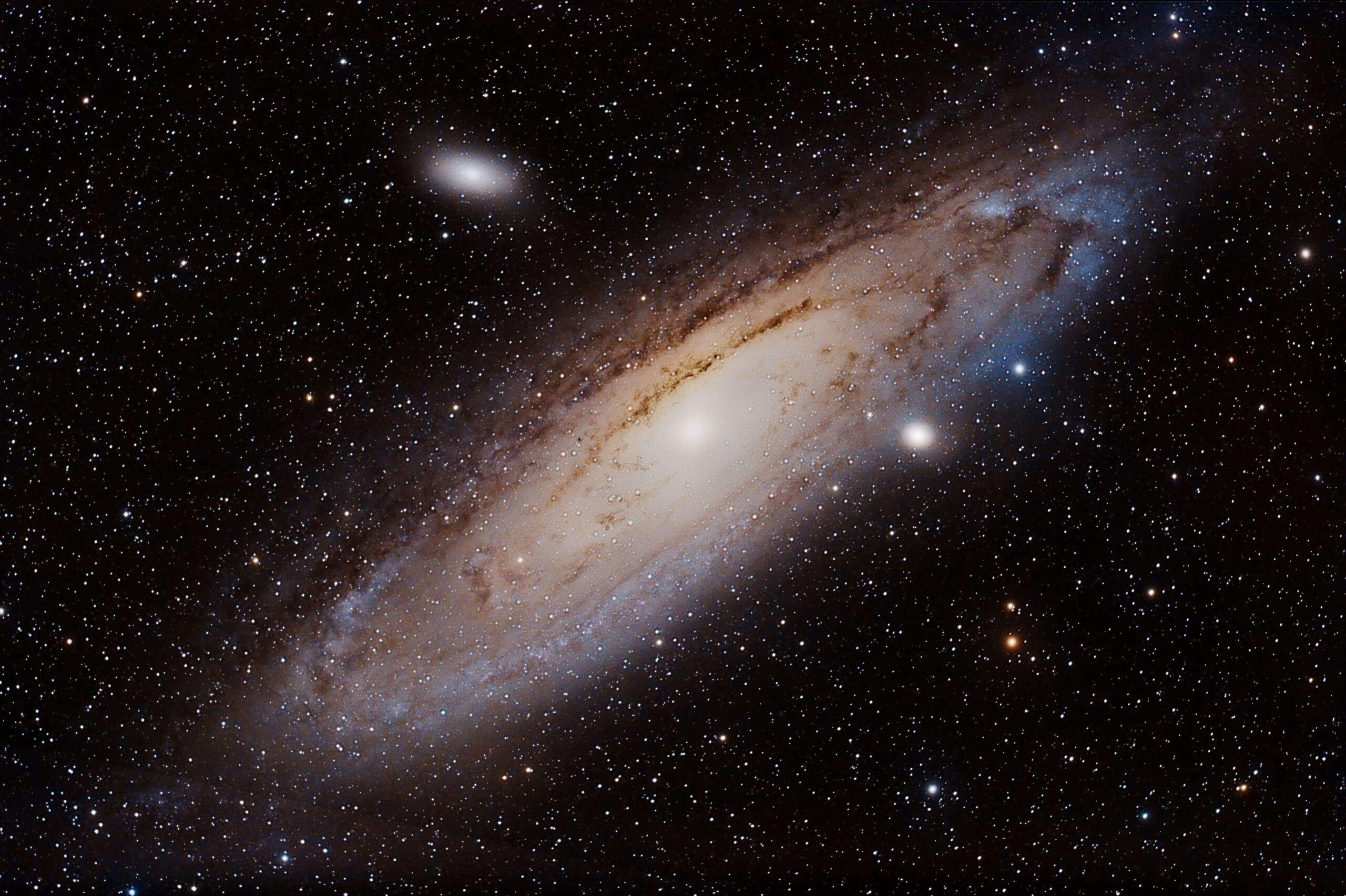
Capturing images of galaxies is not as simple as taking a photograph with a camera. Astronomical imaging involves detecting faint light signals from objects that are millions or even billions of light-years away.
These images often contain:
-
Noise caused by atmospheric interference or instrument limitations
-
Blurred structures due to long exposure times
-
Overlapping celestial objects
-
Complex patterns that are difficult to analyze manually
As a result, astronomers spend significant time processing and interpreting these images. Simplifying galaxy images without losing important scientific information is a major challenge.
What Is Generative AI?
Generative AI refers to a class of artificial intelligence models capable of creating new data based on patterns learned from existing datasets. These models can generate images, text, audio, and more.
In the context of galaxy imaging, generative AI can be trained on large datasets of astronomical images to learn the structure and characteristics of galaxies. Once trained, these models can reconstruct, enhance, or simplify images while maintaining their key features.
Popular techniques in generative AI include Generative Adversarial Networks (GANs) and diffusion models, both of which are widely used in image processing tasks.
The Concept of Image Simplification
Image simplification involves reducing complexity while preserving meaningful information. In galaxy imaging, this means highlighting the main structures—such as spiral arms, cores, and halos—while removing noise and irrelevant details.
Simplified images make it easier for researchers to:
-
Identify galaxy types
-
Detect patterns and anomalies
-
Compare different galaxies
-
Train machine learning models
Generative AI takes this process further by intelligently understanding what to keep and what to remove.
How Generative AI Simplifies Galaxy Images
Generative AI models are trained using large collections of labeled galaxy images. During training, the model learns to recognize patterns, shapes, and features that define different types of galaxies.
Once trained, the model can:
Denoise images – Remove unwanted noise while preserving important structures.
Enhance clarity – Improve the sharpness of galaxy features.
Reconstruct missing data – Fill in gaps caused by incomplete observations.
Abstract key features – Create simplified representations that highlight essential elements.
For example, a noisy image of a spiral galaxy can be transformed into a cleaner version where the spiral arms are clearly visible.
Benefits for Astronomical Research
The use of generative AI in galaxy image simplification offers several advantages for researchers.
First, it significantly reduces the time required for data processing. Instead of manually cleaning and analyzing images, astronomers can rely on AI tools to perform these tasks بسرعة and accurately.
Second, simplified images improve pattern recognition. Researchers can more easily identify galaxy classifications, such as spiral, elliptical, or irregular galaxies.
Third, AI-enhanced images can reveal hidden details that might be missed in raw data. This can lead to new discoveries and insights about the structure and evolution of galaxies.
Supporting Data Analysis and Machine Learning
Simplified galaxy images are not only useful for human analysis but also for training other machine learning models.
Clean and well-structured datasets improve the performance of classification algorithms, anomaly detection systems, and predictive models. Generative AI can create high-quality datasets that are easier for machines to learn from.
This creates a feedback loop where AI improves data quality, which in turn improves AI performance.
Making Astronomy More Accessible
One of the most exciting aspects of this technology is its potential to make astronomy more accessible. Complex astronomical data can be intimidating for students and non-experts.
Simplified images generated by AI can help bridge this gap by presenting information in a clearer and more understandable way. Educational platforms can use these images to teach concepts related to galaxies and the universe.
Citizen science projects can also benefit, allowing volunteers to participate in galaxy classification tasks with greater ease.
Ethical and Scientific Considerations
While generative AI offers powerful capabilities, it also raises important concerns. One major issue is the risk of over-simplification. If too much detail is removed, important scientific information may be lost.
Another concern is the potential for hallucination, where AI generates features that do not exist in the original data. This could lead to incorrect conclusions if not carefully validated.
To address these challenges, researchers must ensure that AI-generated images are used responsibly and verified against original data. Transparency in how models are trained and applied is also essential.
The Role of Human Expertise
Despite the advancements in AI, human expertise remains crucial in astronomical research. Scientists must interpret AI-generated outputs, validate findings, and ensure that conclusions are scientifically accurate.
AI should be seen as a tool that enhances human capabilities rather than replacing them. Collaboration between astronomers and AI systems leads to the best results.
Future Directions in Galaxy Imaging
The future of galaxy image simplification using generative AI looks promising. As models become more advanced, they will be able to handle increasingly complex datasets and produce more accurate results.
Potential future developments include:
-
Real-time image enhancement during telescope observations
-
Integration with space missions for automated data processing
-
Advanced simulations of galaxy formation
-
Improved collaboration between AI and human researchers
These advancements could revolutionize how we study the universe.
Key Takeaways
- Generative AI improves the analysis of complex galaxy images.
- AI reduces noise and enhances important astronomical features.
- Researchers can process large datasets more quickly and accurately.
- Human validation remains essential for scientific reliability.
- AI is accelerating discoveries in astronomy and space science.
Conclusion
Generative AI in Astronomy is transforming how scientists study the universe by simplifying galaxy images and improving the analysis of astronomical data. While AI increases efficiency and supports new discoveries, accurate validation and responsible use remain essential. As AI technology advances, it will continue to play a key role in expanding our understanding of galaxies, stars, and the wider cosmos.