

pH Prediction Using Chemical Imaging: In modern chemistry, accurate measurement and prediction of pH play a vital role in understanding chemical behavior, industrial processes, and environmental systems. Potassium sulfate (K₂SO₄), a widely used inorganic salt, is commonly found in fertilizers, pharmaceuticals, and laboratory experiments. Although it is generally considered a neutral salt, subtle variations in its environment can influence its pH.
Traditional methods of measuring pH involve direct testing using pH meters or indicators. However, with advancements in technology, chemical imaging has emerged as an innovative approach to predict pH levels with higher precision and spatial resolution. By combining imaging techniques with analytical models, scientists can visualize chemical distributions and infer pH changes in real time.
This article explores how chemical imaging can be used to predict the pH of potassium sulfate, highlighting its principles, methodologies, and applications.
Understanding Potassium Sulfate and Its pH
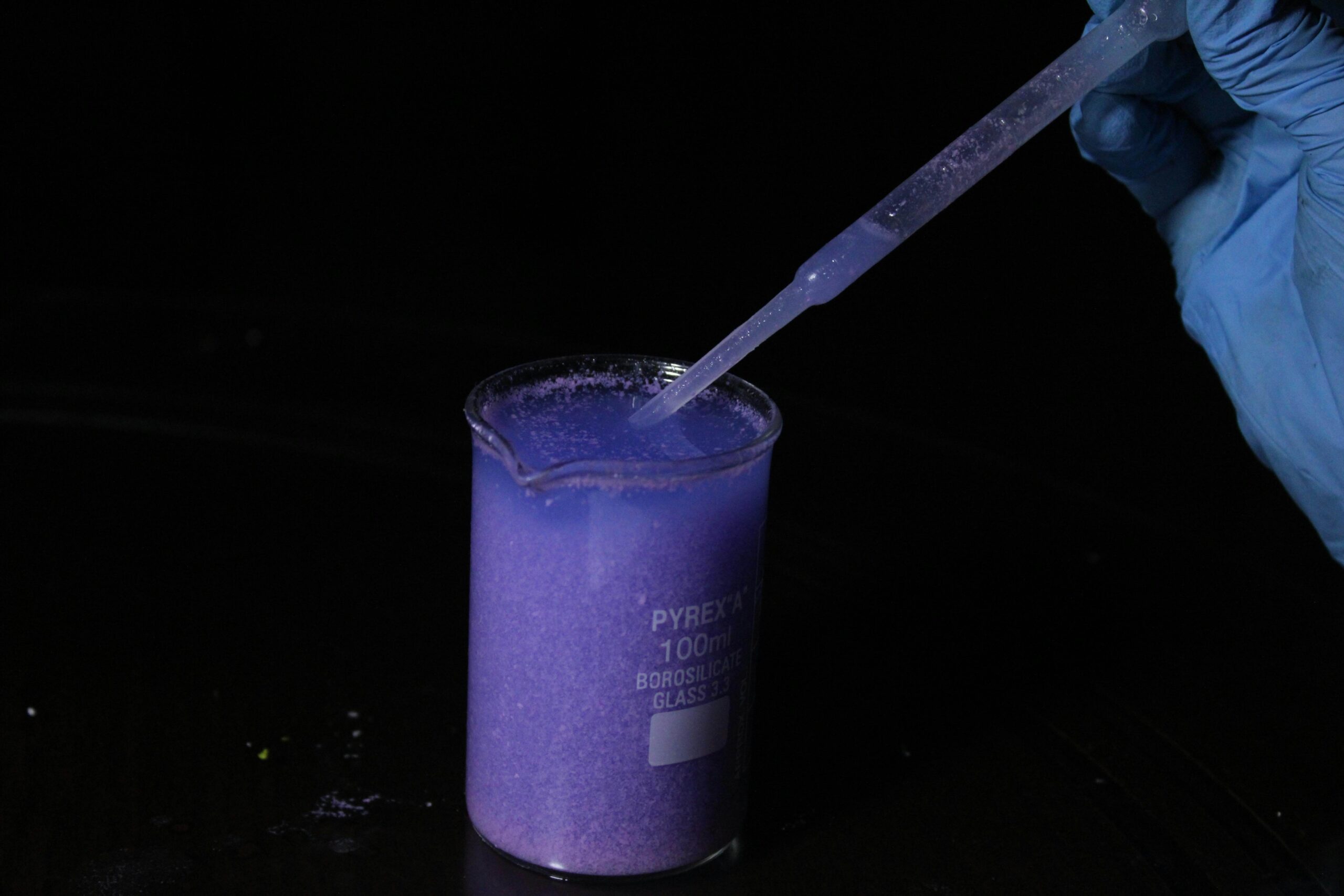
Potassium sulfate is a salt formed from a strong acid (sulfuric acid) and a strong base (potassium hydroxide). In pure aqueous solutions, it typically exhibits a neutral pH close to 7.
However, factors that may influence its pH include:
- Concentration of the solution
- Temperature
- Presence of impurities
- Interaction with other ions
Although the sulfate ion (SO₄²⁻) is weakly basic, its effect on pH is minimal under normal conditions. Therefore, detecting small pH variations requires sensitiveand advanced techniques like chemical imaging.
What is Chemical Imaging?
Chemical imaging is a technique that combines spectroscopy and imaging to visualize the spatial distribution of chemical components in a sample. Instead of measuring a single value, it produces a detailed map showing how chemical properties vary across a surface or within a solution.
Common chemical imaging methods include:
- Infrared (IR) imaging
- Raman spectroscopy imaging
- Fluorescence imaging
- Hyperspectral imaging
These techniques allow scientists to observe chemical interactions at a microscopic level, making them ideal for studying pH variations.
Principles Behind pH Prediction Using Chemical Imaging
Chemical imaging does not measure pH directly. Instead, it detects chemical signals that correlate with pH changes. These signals are then analyzed using mathematical and statistical models to predict pH values.
The process involves:
- Data Acquisition
Imaging techniques capture spectral data from the sample. - Feature Extraction
Specific spectral features related to hydrogen ion concentration are identified. - Calibration Models
Known pH values are used to train models that link spectral data to pH. - Prediction
The trained model predicts pH for unknown samples based on their spectral signatures.
This approach allows for non-invasive and highly detailed pH analysis.
Statistical and Computational Methods
Predicting pH using chemical imaging relies heavily on statistical and computational techniques. Some commonly used methods include:
1. Regression Analysis
Regression models establish relationships between spectral data and pH values. Linear regression is often used for simple systems, while nonlinear regression handles more complex interactions.
2. Multivariate Analysis
Techniques such as Principal Component Analysis (PCA) and Partial Least Squares (PLS) help reduce data complexity and highlight key variables influencing pH.
3. Machine Learning Algorithms
Machine learning models, such as neural networks and support vector machines, can analyze large datasets and improve prediction accuracy. These models learn patterns in the data and make reliable predictions even in complex environments.
Application to Potassium Sulfate
When applied to potassium sulfate solutions, chemical imaging can detect subtle variations in ion distribution and interactions. For example:
- Changes in sulfate ion concentration can slightly alter local pH
- Interaction with other dissolved substances can create microenvironments with different pH levels
- Temperature variations can influence ion mobility and pH
Chemical imaging captures these variations and translates them into detailed pH maps.
Advantages of Chemical Imaging
Using chemical imaging for pH prediction offers several benefits:
1. Non-Destructive Analysis
Samples remain intact, allowing repeated measurements.
2. High Spatial Resolution
pH variations can be observed at microscopic levels.
3. Real-Time Monitoring
Changes in pH can be tracked over time.
4. Enhanced Accuracy
Combining imaging with statistical models improves prediction precision.
Challenges and Limitations
Despite its advantages, chemical imaging also faces challenges:
- High cost of equipment
- Complex data analysis
- Need for calibration with known standards
- Sensitivity to environmental conditions
Additionally, interpreting spectral data requires expertise, making it less accessible for routine use.
Industrial and Environmental Applications
The ability to predict pH using chemical imaging has wide-ranging applications:
1. Agriculture
Monitoring potassium sulfate fertilizers to ensure optimal soil conditions.
2. Environmental Science
Studying water quality and detecting pollution.
3. Pharmaceuticals
Ensuring proper formulation and stability of drugs.
4. Chemical Manufacturing
Optimizing production processes and maintaining quality control.
Future Developments

The future of chemical imaging in pH prediction looks promising. Advances in technology are expected to make these methods more accessible and efficient.
Key trends include:
- Integration with artificial intelligence for better predictions
- Development of portable imaging devices
- Improved data processing techniques
- Wider adoption in industry and research
These innovations will enhance the accuracy and usability of chemical imaging systems.
Conclusion
Predicting the pH of potassium sulfate using chemical imaging represents a significant advancement in analytical chemistry. By combining imaging techniques with statistical and computational models, scientists can achieve precise, non-invasive, and detailed pH analysis.
While potassium sulfate is generally neutral, chemical imaging reveals subtle variations that traditional methods may overlook. This approach not only improves our understanding of chemical systems but also opens new possibilities in research and industry.
As technology continues to evolve, chemical imaging will play an increasingly important role in chemical analysis, offering deeper insights and more accurate predictions.