

Artificial Financial Market Learning Dynamics: Financial markets are often described as complex, unpredictable, and sometimes even chaotic systems. Traditional economic models try to simplify this complexity by assuming that markets behave in a linear and rational way. However, real-world markets rarely follow such neat patterns. This is where the concept of artificial financial markets and learning dynamics becomes important.
Artificial financial markets are simulated environments where traders—often modeled as algorithms—interact with each other. These simulations help researchers understand how markets evolve over time. When combined with learning dynamics and the idea of nonlinear misspecification, they provide a much deeper and more realistic picture of how financial systems behave.
What Are Artificial Financial Markets?
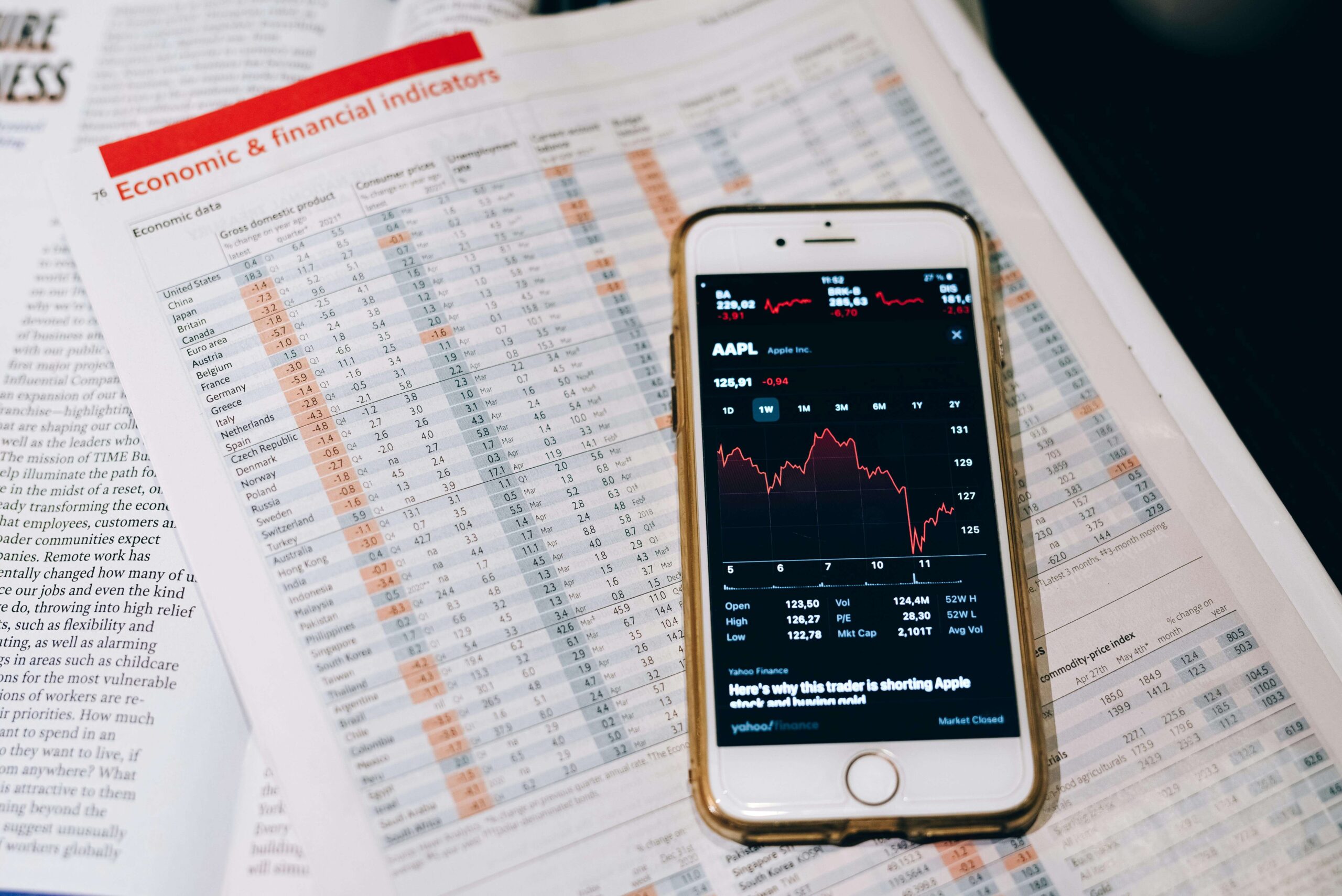
An artificial financial market is essentially a computer-based simulation of a real financial market. Instead of human traders, these markets use agents—automated decision-makers programmed with specific rules or learning capabilities.
These agents can:
- Buy and sell assets
- Adapt their strategies over time
- Learn from past outcomes
- React to other agents’ behaviors
The goal is to recreate the complexity of real markets in a controlled environment. By doing this, researchers can test theories and observe patterns that might be difficult to detect in real-world data.
Understanding Learning Dynamics
Learning dynamics refer to how agents in a market adjust their behavior based on experience. Unlike traditional models where agents are assumed to be perfectly rational, artificial markets allow for bounded rationality—meaning agents learn and evolve over time.
There are different types of learning mechanisms, such as:
- Reinforcement learning (learning from rewards and penalties)
- Adaptive expectations (adjusting predictions based on past errors)
- Evolutionary strategies (successful behaviors spread over time)
These learning processes create dynamic systems where outcomes are not fixed but constantly changing. As agents learn, the market itself evolves, leading to new patterns and sometimes unexpected results.
The Concept of Nonlinear Misspecification
In many financial models, relationships between variables are assumed to be linear. For example, a small change in interest rates is expected to produce a proportional change in asset prices. However, real markets often behave in nonlinear ways.
Nonlinear misspecification occurs when a model incorrectly assumes linear relationships while the true relationships are nonlinear. This can lead to:
- Inaccurate predictions
- Misinterpretation of market behavior
- Poor risk assessment
In artificial financial markets, nonlinear misspecification is particularly important because agents rely on models to make decisions. If these models are flawed, their learning process may lead them to incorrect conclusions.
Interaction Between Learning and Misspecification
One of the most fascinating aspects of artificial financial markets is how learning dynamics interact with nonlinear misspecification.
When agents learn using incorrect models, several things can happen:
1. Persistent Errors
Agents may continue making systematic mistakes because their learning process reinforces incorrect assumptions.
2. Market Instability
Incorrect learning can amplify market fluctuations, leading to bubbles or crashes.
3. Emergent Behavior
Even if individual agents behave irrationally, the overall market may still exhibit complex patterns that resemble real-world phenomena.
This interaction highlights the importance of understanding not just how agents learn, but also what they are learning from.
Real-World Implications
The study of learning dynamics and nonlinear misspecification is not just theoretical—it has practical implications for real financial markets.
Risk Management
Understanding how incorrect models affect learning can help financial institutions better assess risks. It explains why markets sometimes behave unpredictably, even when sophisticated models are used.
Policy Making
Regulators can use insights from artificial markets to design better policies. For example, they can identify conditions that lead to financial instability and take preventive measures.
Investment Strategies
Traders and investors can benefit from recognizing that markets are not always rational. By accounting for nonlinear behaviors, they can develop more robust strategies.
Examples of Nonlinear Behavior in Markets
Real financial markets provide many examples of nonlinear dynamics:
- Market bubbles: Prices rise rapidly and then collapse suddenly
- Flash crashes: Sudden and extreme price drops within minutes
- Herd behavior: Investors follow trends rather than fundamentals
Artificial financial markets can replicate these phenomena, helping researchers understand their underlying causes.
Advantages of Artificial Financial Markets
Using artificial markets to study learning dynamics offers several advantages:
- Controlled environment for experimentation
- Ability to test multiple scenarios quickly
- Insight into complex interactions between agents
- Better understanding of emergent market behavior
These simulations act as a “laboratory” for financial research, where theories can be tested without real-world consequences.
Challenges and Limitations
Despite their usefulness, artificial financial markets also have limitations:
Simplified Assumptions
Even the most advanced models cannot fully capture the complexity of real markets.
Data Limitations
Simulations rely on assumptions and synthetic data, which may not always reflect reality.
Computational Complexity
Modeling large numbers of interacting agents can be computationally expensive.
Interpretation Issues
Understanding the results of these simulations can be challenging, especially when nonlinear dynamics are involved.
Future Directions
The future of artificial financial markets lies in integrating more advanced technologies, such as machine learning and big data analytics. These tools can improve the accuracy of models and reduce the impact of misspecification.
We may also see:
- More realistic agent behaviors
- Better modeling of psychological factors
- Integration with real-time market data
- Enhanced predictive capabilities
As these developments continue, artificial financial markets will become even more valuable for research and decision-making.
Conclusion
Learning dynamics and nonlinear misspecification are key to understanding the true nature of financial markets. Artificial financial markets provide a powerful framework for exploring these concepts, allowing researchers to simulate complex interactions and observe emergent behaviors.
By recognizing that markets are not always linear or perfectly rational, we can develop better models, improve risk management, and make more informed decisions. While challenges remain, the insights gained from these studies are helping to bridge the gap between theory and reality.
In a world where financial systems are becoming increasingly complex, embracing these advanced approaches is not just beneficial—it is essential.