


EEG-Based Image Generation: Imagine a world where you can create images simply by thinking about them. No brushes, no cameras, no keyboards—just your brain translating thoughts into visuals. While this may sound like science fiction, recent advances in artificial intelligence and neuroscience are bringing this idea closer to reality. One of the most fascinating developments in this space is fine-grained image generation using EEG multi-level semantics.
This emerging field combines brain-computer interfaces, deep learning, and cognitive science to decode human brain signals and transform them into meaningful images. It is not just about generating pictures—it is about understanding how humans perceive, imagine, and represent the world internally.
Understanding EEG and Its Role
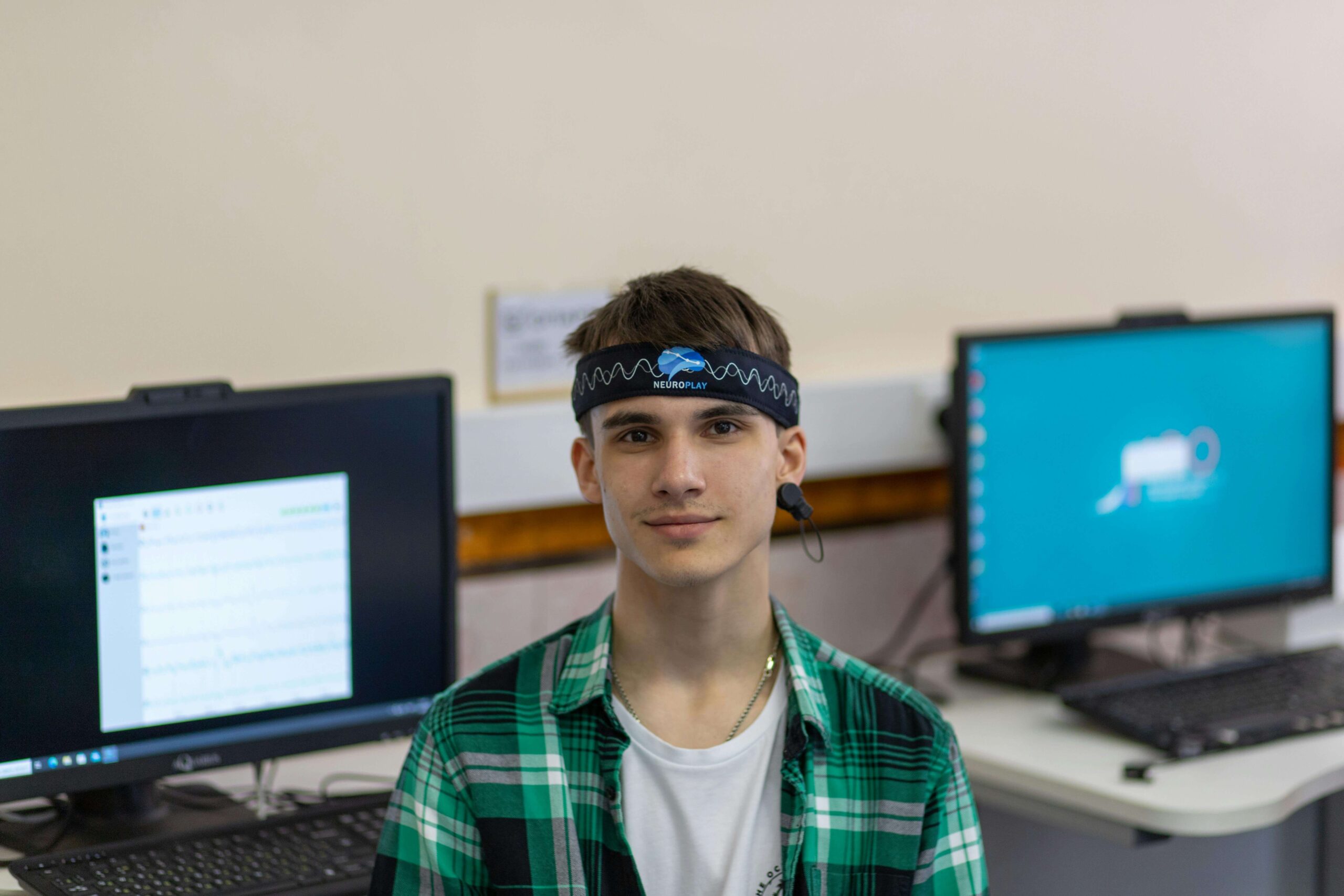
Electroencephalography (EEG) is a technique used to measure electrical activity in the brain. By placing sensors on the scalp, EEG captures patterns of neural activity that reflect thoughts, emotions, and cognitive processes.
Traditionally, EEG has been used in medical and research settings, such as diagnosing neurological conditions or studying brain behavior. However, with the rise of AI, EEG data is now being explored as a source of input for creative and computational tasks.
The challenge lies in the complexity of brain signals. EEG data is noisy, high-dimensional, and difficult to interpret. Turning these signals into something as structured as an image requires advanced models capable of extracting meaningful patterns.
What Are Multi-Level Semantics?
To understand fine-grained image generation, we must first grasp the concept of multi-level semantics. Human perception operates at different levels:
- Low-level semantics: Basic features like edges, colors, and textures
- Mid-level semantics: Shapes, patterns, and object parts
- High-level semantics: Complete objects, scenes, and abstract concepts
When you think of a “cat,” your brain does not just process the word—it activates a rich network of visual features, from fur texture to eye shape to the overall form of the animal.
Multi-level semantic modeling aims to capture these layers of meaning and translate them into computational representations. In the context of EEG, this means decoding brain signals in a way that preserves both detailed features and overall concepts.
Bridging Brain Signals and Images
The core idea behind EEG-based image generation is to map brain activity to visual representations. This process typically involves several stages:
1. Signal Acquisition and Preprocessing
EEG signals are collected and cleaned to remove noise and artifacts. This step is crucial because raw EEG data can be highly unstable.
2. Feature Extraction
Machine learning models identify patterns in the EEG data that correspond to different semantic levels. For example, certain patterns may indicate the perception of color, while others relate to object recognition.
3. Semantic Alignment
The extracted features are aligned with visual representations. This often involves training models on datasets that pair EEG signals with images viewed or imagined by participants.
4. Image Generation
Generative models, such as GANs (Generative Adversarial Networks) or diffusion models, use the decoded features to create images. The goal is to produce visuals that closely match the original thought or perception.
This pipeline is complex, but it highlights the interdisciplinary nature of the field, combining neuroscience, computer vision, and artificial intelligence.
The Importance of Fine-Grained Generation
Early attempts at EEG-based image generation produced blurry or generic images. While these were impressive from a technical standpoint, they lacked detail and specificity.
Fine-grained image generation aims to overcome this limitation by capturing subtle variations in brain signals. Instead of generating a generic “animal,” the system might produce a specific type of dog with distinct features.
This level of detail is made possible by multi-level semantics, which allow models to understand both the big picture and the finer details. It represents a significant step toward more accurate and personalized image generation.
Applications and Possibilities
The potential applications of this technology are vast and transformative.
1. Assistive Communication
For individuals who cannot speak or move, EEG-based systems could provide a new way to communicate. By translating thoughts into images, users could express ideas and emotions more effectively.
2. Creative Expression
Artists and designers could use brain signals as a direct input for creating visual content. This could lead to entirely new forms of art, where imagination flows seamlessly into digital creation.
3. Medical and Psychological Insights
Understanding how the brain represents images can provide valuable insights into cognitive processes. This could improve diagnosis and treatment of neurological and psychological conditions.
4. Human-AI Interaction
EEG-based image generation could redefine how humans interact with machines. Instead of using traditional interfaces, users could control systems through thought alone.
Challenges and Limitations
Despite its promise, this field faces several significant challenges.
Data Complexity
EEG signals are inherently noisy and vary widely between individuals. This makes it difficult to create models that generalize well across different users.
Limited Resolution
Compared to other brain imaging techniques, EEG has relatively low spatial resolution. This limits the level of detail that can be extracted from brain signals.
Ethical Concerns
The ability to decode thoughts raises important ethical questions. Issues of privacy, consent, and data security must be carefully addressed to prevent misuse.
Computational Demands
Training models that integrate EEG data and image generation requires substantial computational resources. This can be a barrier to widespread adoption.
The Role of Deep Learning
Deep learning plays a central role in overcoming these challenges. Neural networks are particularly well-suited for handling complex, high-dimensional data like EEG signals.
Recent advances in architectures, such as transformers and diffusion models, have improved the ability to capture multi-level semantics. These models can learn hierarchical representations, making them ideal for fine-grained image generation.
Moreover, transfer learning and multimodal learning techniques allow models to leverage knowledge from other domains, such as text and images, to improve performance.
Toward More Human-Centric AI
One of the most exciting aspects of EEG-based image generation is its potential to make AI more human-centric. Instead of requiring humans to adapt to machines, this technology allows machines to adapt to human thought processes.
By directly connecting brain signals to visual outputs, we can create systems that are more intuitive, responsive, and aligned with human cognition. This represents a shift from tool-based interaction to a more seamless integration between humans and technology.
Future Directions

The future of this field is both exciting and uncertain. Researchers are exploring ways to improve accuracy, reduce noise, and enhance the resolution of EEG-based systems.
Some promising directions include:
- Combining EEG with other brain imaging techniques for better data quality
- Developing personalized models tailored to individual users
- Integrating real-time processing for immediate image generation
- Expanding applications beyond images to include video and virtual reality
As these advancements continue, the gap between thought and creation may become increasingly narrow.
Conclusion
Fine-grained image generation with EEG multi-level semantics represents a remarkable convergence of neuroscience and artificial intelligence. It challenges our understanding of creativity, perception, and the boundaries between mind and machine.
While the technology is still in its early stages, its potential is undeniable. By decoding the rich, multi-layered signals of the human brain, we can begin to transform thoughts into tangible visual forms.
In doing so, we are not just building smarter machines—we are unlocking new ways of understanding ourselves.