

Artificial intelligence is transforming higher education by changing how teachers prepare lessons, deliver instruction, and support students. Tools such as ChatGPT and other generative AI platforms help educators create learning materials, explain complex topics, generate quizzes, and provide personalized academic support. Generative AI in Education is improving teaching efficiency while creating more engaging learning experiences. However, responsible use, academic integrity, and human oversight remain essential to ensure AI enhances learning without replacing educators.
Understanding Generative AI Tools in Education
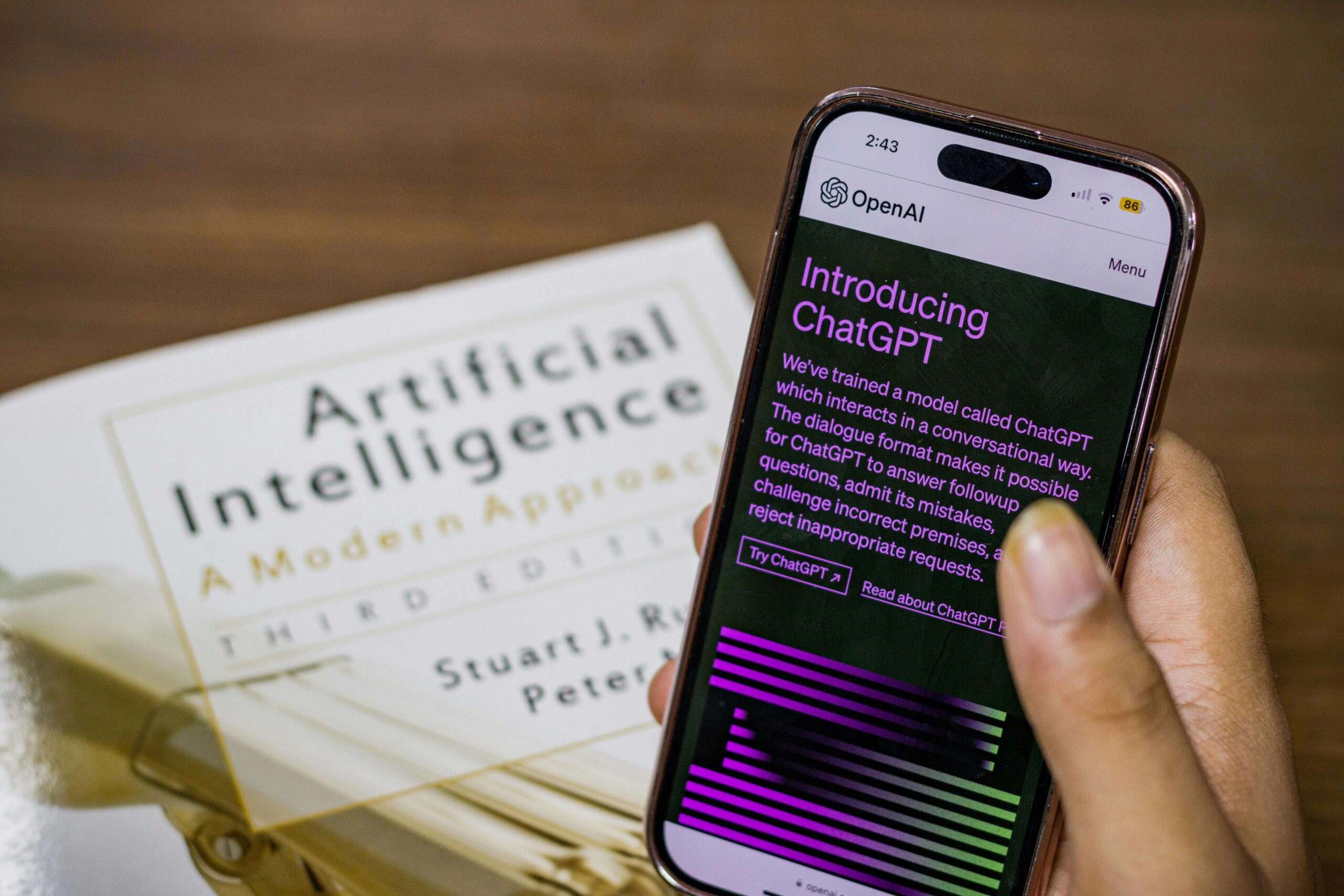
Generative AI refers to artificial intelligence systems that can produce original content such as text, images, audio, or code based on patterns learned from large datasets.
Platforms like ChatGPT, Google Gemini, and Claude are designed to respond to user prompts by generating relevant and coherent information.
In university settings, these tools can perform tasks such as:
-
Explaining complex academic concepts
-
Assisting with lesson planning
-
Generating examples and practice questions
-
Supporting research and literature reviews
-
Providing writing assistance and feedback
By automating certain routine tasks, generative AI allows instructors to focus more on mentoring students and facilitating deeper discussions.
Supporting Teachers in Course Preparation
Preparing university courses requires significant time and effort. Instructors must develop lecture materials, prepare assignments, create quizzes, and organize teaching resources.
Generative AI tools can assist educators in these tasks by helping generate outlines for lectures, summarize academic readings, or suggest discussion topics.
For example, a professor teaching economics might ask an AI tool to generate examples that explain complex theories. Similarly, a computer science instructor could use AI to create coding exercises for students.
This assistance reduces the time required for routine preparation tasks and allows instructors to focus on improving teaching strategies.
However, AI-generated materials should always be reviewed carefully to ensure accuracy and alignment with course objectives.
Enhancing Student Learning Experiences
Generative AI tools can also improve the learning experience for university students.
Many students struggle with complex academic concepts, especially when studying independently. AI tools can provide additional explanations and examples that help clarify difficult topics.
For instance, a student studying physics might ask an AI system to explain a concept in simpler terms or provide step-by-step problem solutions.
Because generative AI tools are available at any time, they act as a form of academic support outside traditional classroom hours.
This accessibility can be particularly helpful for students who need additional guidance or who study at different paces.
Personalized Learning Opportunities
One of the most promising aspects of generative AI in education is its ability to support personalized learning.
Every student learns differently. Some prefer detailed explanations, while others benefit from visual examples or practice exercises.
Generative AI systems can adapt responses based on the type of questions students ask. This flexibility allows students to receive customized explanations that match their learning style.
For example, a student struggling with statistics may request additional examples or simplified explanations until the concept becomes clear.
Such personalized assistance can enhance understanding and build student confidence.
Improving Academic Writing Skills

Writing is an essential skill for university students. Generative AI tools can assist with writing tasks by helping students brainstorm ideas, organize arguments, and improve clarity.
Students can use AI tools to:
-
Generate outlines for essays
-
Identify grammatical errors
-
Suggest improvements for sentence structure
-
Summarize research findings
However, it is important that AI tools are used as writing assistants rather than substitutes for original work.
Universities must encourage students to maintain academic integrity and ensure that their work reflects their own understanding and ideas.
Facilitating Research and Knowledge Exploration
University education often involves extensive research and critical analysis of academic literature.
Generative AI tools can assist students by summarizing research articles, explaining theoretical concepts, and identifying key themes within complex materials.
This capability can help students navigate large amounts of information more efficiently.
For example, students conducting research may use AI tools to gain a quick overview of a topic before reading full academic papers.
While AI-generated summaries can save time, students should always verify information using reliable academic sources.
Encouraging Interactive Learning
Generative AI tools can also support more interactive and engaging learning environments.
Instead of passively reading textbooks, students can interact with AI systems by asking questions, exploring different scenarios, and testing their understanding.
For example, students studying history might simulate debates about historical events, while business students could analyze hypothetical market situations.
This interactive approach encourages curiosity and deeper engagement with academic subjects.
Challenges and Concerns in Using Generative AI
Despite its benefits, the use of generative AI in universities also raises several challenges.
Academic Integrity Issues
One of the biggest concerns is the possibility that students may rely too heavily on AI to complete assignments.
If students submit AI-generated essays as their own work, it becomes difficult for instructors to accurately assess their knowledge and skills.
Universities must therefore establish clear policies regarding acceptable AI usage.
Accuracy and Reliability
AI systems sometimes generate incorrect or misleading information.
Teachers and students must carefully evaluate AI-generated content to ensure accuracy.
Critical thinking remains essential when using AI tools for academic purposes.
Dependence on Technology
Excessive reliance on AI tools may reduce students’ motivation to develop independent problem-solving skills.
Educators must encourage students to use AI as a support tool rather than a replacement for learning.
Ethical and Privacy Considerations
Universities must also consider issues related to data privacy and responsible AI usage.
Ensuring that AI systems are used ethically and transparently is crucial for maintaining trust in educational institutions.
Best Practices for Using AI as a Teaching Aid
To maximize the benefits of generative AI while minimizing risks, universities can adopt several best practices.
First, institutions should promote AI literacy, helping students understand how AI works and what its limitations are.
Second, instructors can design assignments that require personal reflection, critical analysis, and creativity—skills that AI cannot easily replicate.
Third, universities should provide clear guidelines about when and how AI tools may be used in academic work.
Finally, educators should encourage students to treat AI tools as learning partners rather than shortcuts.
The Future of Generative AI in Universities

The presence of generative AI in higher education is likely to continue expanding in the coming years.
As AI technologies become more advanced, universities may integrate them into learning management systems, digital classrooms, and research platforms.
Future applications may include:
-
AI-powered tutoring systems
-
Automated feedback on student assignments
-
Intelligent research assistants
-
Virtual learning environments
These innovations could reshape how knowledge is delivered and accessed in academic institutions.
However, the human role in education—guidance, mentorship, and inspiration—will remain irreplaceable.
Frequently Asked Questions
Q:What is Generative AI in education?
A:AI that supports teaching and learning.
Q:How does ChatGPT help university teachers?
A:It creates and explains content.
Q:What are the benefits of AI in education?
A:It improves learning efficiency.
Q:Can AI replace university teachers?
A:No, it supports teachers.
Q:What are the risks of using AI in education?
A:Bias, errors, and misuse.
Q:What is the future of Generative AI in education?
A:Smarter personalized learning.
Key Takeaways
- Generative AI improves teaching, learning, and content creation.
- AI supports educators but does not replace them.
- Responsible AI use protects academic integrity.
- Human oversight ensures accurate and ethical learning.
- AI will continue to enhance higher education through personalized learning.
Conclusion
Generative AI in Education is reshaping university teaching by helping educators create content, personalize instruction, and improve learning experiences. While AI offers significant advantages, its greatest value comes from supporting—not replacing—teachers. By combining AI innovation with ethical practices and human expertise, universities can build more effective, inclusive, and future-ready learning environments.