

Artificial intelligence is transforming how people work, learn, create, and make decisions. As AI systems become more advanced, new concepts are emerging to describe the possibilities and risks of increasingly powerful technology. One such concept is Artificial God Optimization a speculative term associated with the idea of optimizing artificial intelligence toward exceptionally powerful decision-making, problem-solving, or goal achievement. But what does Artificial God Optimization actually mean? Is it a real AI technology, a theoretical concept, or a vision of future artificial intelligence?
This guide explores its possible meaning, how it relates to AI optimization, its potential applications, the ethical challenges it raises, and why responsible AI development matters. Understanding these ideas can help businesses, researchers, and everyday users think more critically about the future of advanced AI.
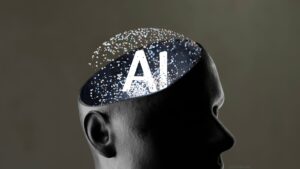
What Is Artificial God Optimization?
Understanding the Meaning of Artificial God Optimization
Artificial God Optimization is best understood as a speculative concept rather than an established scientific term or standardized AI technique. It describes a hypothetical approach in which artificial intelligence is optimized to achieve extremely high levels of intelligence, efficiency, planning, or decision-making.
The word “god” in this context is metaphorical. It may suggest a system imagined to possess extraordinary capabilities, not a literal divine being. Depending on how the term is used, it can refer to advanced AI that aims to solve complex problems, manage large-scale systems, or make decisions across multiple areas.
It is important to distinguish this concept from existing AI optimization methods, which have specific technical definitions and measurable objectives.
How It Relates to Artificial Intelligence Optimization
AI optimization is an established field focused on improving how machine learning systems perform. Developers optimize models by adjusting parameters, selecting better algorithms, improving training data, and measuring performance against defined objectives.
For example, an AI model might be optimized to recognize images more accurately, generate more useful responses, or forecast demand more effectively.
Artificial God Optimization takes this general idea into a more speculative territory: what might happen if optimization were directed toward increasingly broad and powerful capabilities? This raises questions about how objectives are chosen, how success is measured, and whether a system’s behavior remains aligned with human needs.
Is Artificial God Optimization a Real Technology?
There is no widely recognized technical standard or established AI discipline officially named Artificial God Optimization. The phrase is better treated as a conceptual label that may appear in discussions about advanced AI, technological ambition, and hypothetical superintelligence.
However, related research areas are real. These include machine learning optimization, artificial general intelligence research, AI alignment, autonomous systems, and AI safety.
Understanding the distinction matters because speculative terminology should not be confused with proven capabilities. When evaluating claims about this topic, readers should look for credible research, clear definitions, and evidence rather than assuming that a powerful-sounding name represents a functioning technology.
How Could Artificial God Optimization Work?
Defining Goals and Performance Measures
Any optimization process begins with an objective. In conventional AI, that objective could involve reducing prediction errors, improving recommendation quality, or minimizing the time required to complete a task.
A hypothetical system inspired by Artificial God Optimization might pursue broader goals involving several competing measures, such as efficiency, accuracy, reliability, and resource use.
The challenge is deciding how to balance these goals. A system optimized only for speed, for example, might overlook accuracy or safety. For this reason, developers need clearly defined objectives, appropriate constraints, and evaluation methods that measure more than one aspect of performance.
Learning From Data and Feedback
Modern AI systems often learn patterns from training data and improve through evaluation and feedback. Depending on the system, developers may use supervised learning, reinforcement learning, or other machine learning approaches.
In a hypothetical highly advanced optimization framework, feedback could help evaluate whether proposed actions achieve their intended outcomes. Yet feedback is only useful when it is reliable and the objectives are appropriate.
Poor-quality data, incomplete feedback, or biased evaluation methods can lead to undesirable results. More computing power or more optimization does not automatically produce better judgment. Human oversight and careful testing remain important, particularly when AI affects consequential decisions.
Monitoring Results and Maintaining Human Control
A responsible optimization process includes testing, monitoring, and reviewing system behavior. Developers need to understand when a model performs well, when it fails, and whether its outputs change under different conditions.
For advanced AI applications, safeguards may include access restrictions, independent evaluations, audit logs, human approval for high-impact actions, and mechanisms to stop unsafe operations.
These controls are especially important when a system can take actions rather than simply provide recommendations. Greater autonomy can increase efficiency, but it can also increase the consequences of mistakes. Responsible development therefore requires capabilities to be matched with suitable limits and accountability.
Potential Benefits and Applications of Artificial God Optimization
Scientific Research and Complex Problem-Solving
Advanced AI optimization could support scientific research by helping researchers analyze large datasets, generate hypotheses, identify patterns, and explore possible solutions. In fields such as materials science, climate modeling, and drug discovery, AI tools can help narrow down possibilities that would otherwise take considerable time to investigate.
A hypothetical system with broader problem-solving capabilities might assist with coordinating complex research tasks. However, its findings would still require validation through appropriate scientific methods.
AI should be viewed as a tool that supports researchers rather than a guaranteed source of correct answers. The value of any system depends on the quality of its evidence, the suitability of its methods, and the reliability of its results.
Business Automation and Better Decision-Making
Businesses already use AI to forecast demand, analyze customer behavior, detect unusual transactions, automate routine tasks, and support operational planning.
More advanced optimization approaches could potentially coordinate several business processes while accounting for changing conditions. For example, a supply chain system might compare inventory levels, delivery schedules, and demand forecasts to recommend adjustments.
Such applications could reduce repetitive work and help organizations use resources more effectively. Nevertheless, businesses should evaluate performance carefully and consider privacy, security, transparency, and human accountability before deploying AI in important workflows.
Healthcare, Education, and Environmental Planning
AI can assist healthcare professionals with certain administrative tasks, medical image analysis, and research. In education, AI-powered tools can help explain concepts, support personalized practice, and provide feedback. Environmental applications include energy forecasting, resource management, and climate-related analysis.
These examples demonstrate how optimization techniques can support complex human needs without requiring the speculative idea of Artificial God Optimization to be an actual technology.
Future systems may become more capable, but sensitive applications need appropriate professional oversight. Medical decisions, educational assessments, and environmental policies involve context, values, and uncertainty that cannot always be reduced to a single performance score.
Risks and Ethical Challenges of Artificial God Optimization
Misaligned Goals and Unintended Outcomes
One of the most important challenges in advanced AI is ensuring that systems behave in ways consistent with their intended purpose. A model may achieve a specified objective while producing outcomes that users did not anticipate.
For example, a system instructed to maximize engagement might favor attention-grabbing content over accuracy. A scheduling system focused only on efficiency might create unreasonable workloads if employee well-being is not considered.
This illustrates why objective design matters. Developers should identify possible unintended consequences, test systems under different conditions, and include relevant safety requirements. Optimizing a system is not enough; the objective itself must be appropriate.
Bias, Privacy, and Accountability

AI systems can reproduce biases present in their training data or evaluation processes. If these problems are not identified, automated decisions may disadvantage certain groups or produce inconsistent outcomes.
Privacy is another concern, especially when systems process personal, financial, medical, or business information. Organizations should limit unnecessary data collection, protect sensitive information, and comply with applicable laws and regulations.
Accountability must also remain clear. When AI contributes to a consequential decision, people should understand who is responsible for reviewing the result, correcting errors, and addressing harm. Powerful technology does not remove the need for human responsibility.
AI Safety, Oversight, and Responsible Development
As AI systems gain capabilities, safety research becomes increasingly important. Researchers investigate how to make models more reliable, reduce harmful outputs, evaluate potentially dangerous capabilities, and maintain control over autonomous systems.
Practical safeguards may include pre-deployment testing, continuous monitoring, access controls, independent audits, and human review for high-risk decisions. Organizations should also establish clear procedures for responding to failures.
No single safeguard can eliminate every risk. Responsible AI development requires a combination of technical controls, governance, transparency, and ongoing evaluation. The goal should be to obtain useful benefits while reducing foreseeable harm.
The Future of Artificial God Optimization
The Role of Advanced AI Research
Future AI research may produce systems that can perform increasingly complex tasks, use tools, and coordinate multi-step workflows. Progress in reasoning, planning, model evaluation, and AI alignment could influence how these systems are developed and deployed.
However, the capabilities of future AI remain uncertain. Predictions about artificial superintelligence or systems that outperform humans across nearly every domain should be treated as possibilities under debate, not established facts.
The most useful way to examine Artificial God Optimization is to connect its broader ideas with measurable research questions: how should objectives be defined, how can systems be evaluated, and what safeguards are needed as capabilities improve?
The Importance of Human Values and Governance
AI systems operate within human institutions and affect people with different needs and priorities. Decisions about fairness, privacy, safety, and acceptable risk therefore require more than technical optimization.
Developers, policymakers, businesses, researchers, and affected communities all have roles in shaping responsible AI use. Governance approaches can establish standards for testing, transparency, accountability, and appropriate human supervision.
Organizations should also consider whether an AI application is necessary, whether its benefits justify its risks, and whether a less complex solution would be more appropriate. These questions help ensure that technological progress serves meaningful human goals.
Preparing for a Responsible AI-Powered Future

Individuals and organizations can prepare for future AI developments by learning the fundamentals of machine learning, evaluating AI-generated information critically, and understanding the limitations of automated systems.
Businesses should begin with clearly defined use cases, measurable success criteria, and proportionate risk controls. Users should verify important claims rather than relying on confident-sounding AI outputs.
Artificial God Optimization may remain a speculative concept, but the questions it raises are relevant to real AI development. How should increasingly capable systems be directed? Who determines their goals? How can their behavior be monitored and corrected?
Answering these questions will help shape a future in which AI innovation is balanced with safety, accountability, and human well-being.
Conclusion
Artificial God Optimization is a speculative term for the idea of directing AI optimization toward exceptionally powerful capabilities and broad problem-solving. It is not currently a recognized, standardized AI technology. Nevertheless, it provides a starting point for discussing AI optimization, future intelligence, ethical responsibility, and safety.
The future of advanced AI should not be measured by capability alone. Reliable performance, well-defined objectives, human oversight, and responsible governance are equally important. By focusing on these principles, society can pursue useful AI innovation while taking its potential risks seriously.