

Artificial Computation Models: The idea of building machines that think like humans has fascinated scientists, philosophers, and engineers for decades. From early mechanical calculators to today’s advanced artificial intelligence systems, the journey of artificial computation has been deeply inspired by one powerful model—the human brain. But as technology evolves, researchers are no longer limited to just mimicking biological processes. They are now exploring three major paradigms: natural brain systems, classical computational models, and quantum brain-inspired computation.
Each of these approaches represents a different way of understanding intelligence and processing information. Together, they are shaping the future of computing in ways that were once considered science fiction.
The Natural Brain: Nature’s Ultimate Computer
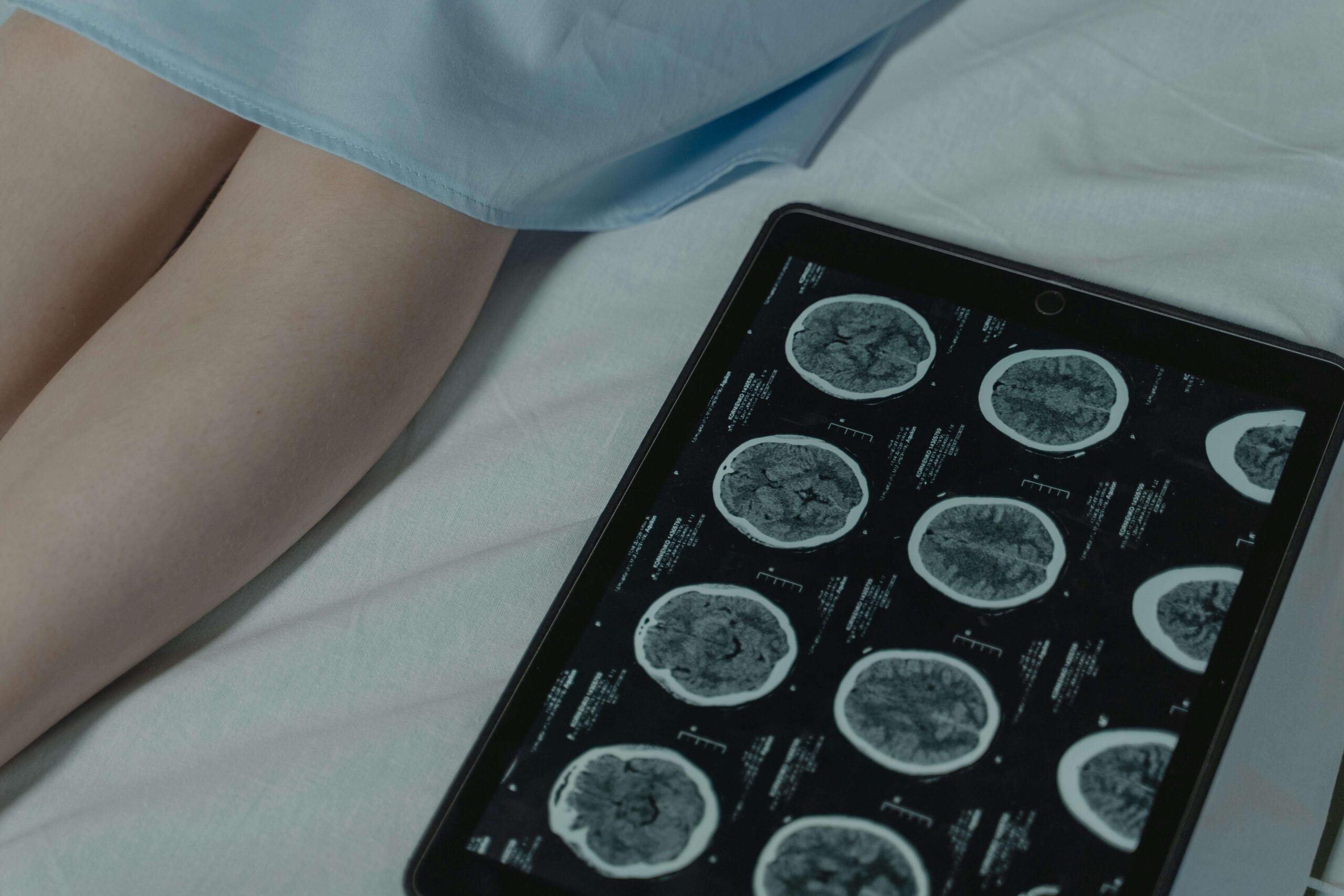
The human brain is often described as the most efficient and complex computing system known. It consists of billions of neurons interconnected through trillions of synapses, forming a highly dynamic and adaptive network.
Unlike traditional computers, the brain does not rely on rigid instructions. Instead, it processes information through patterns, associations, and experiences. This ability allows humans to learn, adapt, and make decisions even in uncertain environments.
Key characteristics of the natural brain include:
- Parallel processing: Multiple tasks are handled simultaneously
- Plasticity: The brain can rewire itself based on learning and experience
- Energy efficiency: It consumes far less energy compared to modern supercomputers
- Contextual understanding: It interprets meaning beyond raw data
Artificial intelligence, particularly neural networks, is heavily inspired by these biological principles. However, even the most advanced AI systems today are still far from replicating the full capabilities of the human brain.
Classical Computation: The Foundation of Modern AI
Classical computation refers to the traditional computing systems that operate using binary logic—zeros and ones. These systems follow predefined instructions and algorithms to process data.
From laptops to data centers, classical computers form the backbone of modern technology. Artificial intelligence, as we know it today, largely runs on classical systems. Machine learning algorithms, deep learning models, and data analytics all depend on classical computation.
Strengths of classical computation include:
- Reliability and precision: Ideal for structured tasks and calculations
- Scalability: Systems can be expanded with more processing power
- Established infrastructure: Decades of development and optimization
- Deterministic behavior: Outputs are predictable based on inputs
However, classical systems also have limitations. They struggle with problems that require massive parallelism, such as simulating complex biological processes or solving certain optimization challenges.
Despite these limitations, classical computation has successfully enabled breakthroughs in areas like natural language processing, computer vision, and robotics.
Bridging Natural and Classical Systems: Artificial Neural Networks
Artificial neural networks (ANNs) serve as a bridge between natural and classical computation. Inspired by the structure of the human brain, ANNs consist of layers of interconnected nodes (neurons) that process information collectively.
These networks learn by adjusting weights based on input data, mimicking the learning process of biological neurons. Deep learning, a subset of machine learning, uses multi-layered neural networks to solve complex tasks such as image recognition and speech processing.
While ANNs have achieved remarkable success, they still operate on classical hardware. This creates a gap between biological intelligence and artificial computation, as classical systems cannot fully replicate the brain’s efficiency and adaptability.
The Quantum Brain: A New Frontier
Quantum computation introduces an entirely new paradigm. Unlike classical bits, which exist as either 0 or 1, quantum bits (qubits) can exist in multiple states simultaneously due to the principle of superposition.
Additionally, quantum systems exhibit entanglement, where the state of one qubit is directly related to another, regardless of distance. These properties enable quantum computers to process vast amounts of information in parallel.
The concept of a “quantum brain” is still largely theoretical but highly promising. It suggests that future artificial systems could leverage quantum mechanics to achieve levels of intelligence far beyond current capabilities.
Potential advantages of quantum brain-inspired computation include:
- Exponential processing power
- Enhanced pattern recognition
- Efficient optimization solutions
- Improved simulation of complex systems
Researchers are already exploring quantum machine learning, where quantum algorithms enhance traditional AI models.
Comparing the Three Paradigms
To better understand their roles, let’s compare natural, classical, and quantum computation:
| Feature | Natural Brain | Classical Systems | Quantum Systems |
|---|---|---|---|
| Processing Style | Parallel & adaptive | Sequential & logical | Parallel & probabilistic |
| Energy Efficiency | Extremely high | Moderate to low | Potentially high |
| Learning Ability | Continuous & dynamic | Algorithm-dependent | Emerging capability |
| Complexity Handling | Excellent | Limited | Exceptional (theoretical) |
| Maturity Level | Fully evolved | Highly developed | Early-stage |
Each paradigm has its strengths, and the future likely lies in combining them rather than replacing one with another.
Hybrid Intelligence: The Future of Computation
The next step in artificial computation is the integration of natural, classical, and quantum approaches into hybrid systems. These systems aim to combine:
- The adaptability of the natural brain
- The reliability of classical computation
- The power of quantum mechanics
Such hybrid models could lead to machines that not only compute but also understand, learn, and innovate in ways similar to humans.
For example:
- Brain-computer interfaces could connect human cognition with machines
- Quantum processors could accelerate AI training
- Neuromorphic chips could mimic brain-like processing on classical hardware
This convergence is expected to redefine industries, from healthcare and finance to education and cybersecurity.
Challenges in Achieving Brain-Like Computation
Despite the excitement, several challenges remain:
1. Technical Limitations
Quantum computers are still in early development stages and require extremely controlled environments.
2. Understanding the Brain
We do not yet fully understand how the human brain works, making it difficult to replicate.
3. Integration Complexity
Combining different computational paradigms into a unified system is highly complex.
4. Ethical Considerations
Advanced AI systems raise concerns about privacy, control, and societal impact.
Real-World Applications

Even with current limitations, progress in these areas is already influencing real-world applications:
- Healthcare: Brain-inspired AI for disease diagnosis
- Finance: Advanced algorithms for market prediction
- Robotics: Intelligent machines capable of learning from environments
- Cybersecurity: Adaptive systems that detect threats in real time
As quantum technologies mature, these applications will become even more powerful.
Conclusion
The evolution of artificial computation is no longer confined to a single approach. By exploring natural, classical, and quantum brain models, researchers are unlocking new dimensions of intelligence.
The natural brain provides inspiration, classical systems offer stability, and quantum computation introduces unprecedented power. Together, they form a roadmap toward a future where machines are not just tools but intelligent collaborators.
While challenges remain, the fusion of these paradigms holds the promise of transforming how we compute, think, and interact with technology. The journey toward truly intelligent systems is still unfolding—but it is already reshaping the world around us.