

Transfusion medicine is a specialized medical field. It focuses on the collection, testing, storage, compatibility, and safe transfusion of blood components. As healthcare becomes increasingly data-driven, Artificial Intelligence (AI) is transforming transfusion medicine by improving blood safety, optimizing blood supply management, reducing transfusion errors, and supporting better clinical decisions. From automated blood typing to predictive supply forecasting, AI is helping hospitals deliver faster, safer, and more personalized patient care..
What Is Transfusion Medicine and Why Does It Matter?

Transfusion medicine is the healthcare discipline dedicated to managing the safe, efficient, and appropriate use of blood products. in fact, it serves as the vital link between donor blood banks and bedside patient care, encompassing everything from donor eligibility screening to complex compatibility testing. as modern healthcare grows more complex, maintaining a safe and steady blood supply requires maximum precision..
Understanding Transfusion Medicine
Explain the role of transfusion medicine, blood banks, donor screening, blood testing, compatibility testing, and clinical transfusion services.
The Importance of Safe Blood Transfusions
Discuss why accurate blood matching, infection screening, and quality control are essential for patient safety.
How Artificial Intelligence Fits Into Modern Blood Banking
Introduce AI, machine learning, predictive analytics, and automation as technologies improving transfusion medicine.
AI Applications in Transfusion Medicine
Artificial Intelligence is revolutionizing modern blood banking by shifting key clinical and operational workflows from manual, labor-intensive processes to highly accurate, automated systems. For instance, by integrating machine learning algorithms, advanced computer vision, and predictive analytics into everyday laboratory practices, healthcare providers can accelerate routine testing. while significantly improving precision. from donor selection to real-time inventory control, AI-driven technologies are enhancing every critical link in the transfusion chain
AI for Blood Donor Screening and Blood Typing
Cover donor eligibility prediction, infectious disease screening, automated blood grouping, and antigen detection.
AI-Powered Compatibility Testing and Crossmatching
Explain automated compatibility testing, image recognition, rare blood group detection, and reduced human error.
Smart Blood Bank Inventory Management
Describe demand forecasting, inventory optimization, blood expiration reduction, emergency planning, and supply chain improvements .As a result, modern AI systems streamline blood supply management by analyzing historical usage trends, tracking expiration dates in real time, and automating stock replenishment.
Benefits of AI in Transfusion Medicine

Integrating Artificial Intelligence into transfusion medicine offers transformative benefits. It turns complex clinical data into actionable insights that elevate patient care. by replacing traditional, labor-intensive workflows with intelligent automation, AI minimizes human error, speeds up critical laboratory testing., and enables tailored treatment strategies. Ultimately, these advancements collectively enhance patient safety, optimize resource usage, and streamline operations across hospitals and blood banks
Improved Blood Safety and Clinical Accuracy
Discuss reduced transfusion reactions, better compatibility, and more accurate laboratory results.
Faster Laboratory Workflows and Automation
Explain robotic sample handling, automated testing, reduced turnaround times, and improved efficiency.
Personalized Patient Care Through Predictive Analytics
Cover patient risk assessment, individualized transfusion planning, and AI-assisted clinical decision support.
Challenges and Ethical Considerations
AI in transfusion medicine offers groundbreaking potential. However, it also introduces critical ethical and operational challenges that healthcare systems must carefully navigate.. As blood banks and hospitals rely more on automated algorithms to guide patient care and supply chains, issues regarding data protection, seamless system integration, and algorithm reliability come to the forefront. addressing these concerns is essential to ensure that artificial intelligence enhances, rather than compromises, patient safety, privacy, and clinical trust.
Key Points Covered to Transition into Your Subheadings:
-
Data Privacy, HIPAA Compliance, and Cybersecurity: Addresses data protection and privacy concerns.
-
AI Integration with Hospital Systems: Touches on operational and system integration hurdles.
-
Reliability, Bias, and Human Oversight: Highlights the need for algorithm accuracy and essential clinician oversight.
Data Privacy, HIPAA Compliance, and Cybersecurity
Discuss patient privacy, secure data storage, regulatory compliance, and responsible AI use.
AI Integration with Hospital Systems
Explain interoperability, legacy healthcare systems, implementation costs, and staff training.
Reliability, Bias, and Human Oversight
Highlight algorithm validation, transparency, clinician oversight, and ethical decision-making.
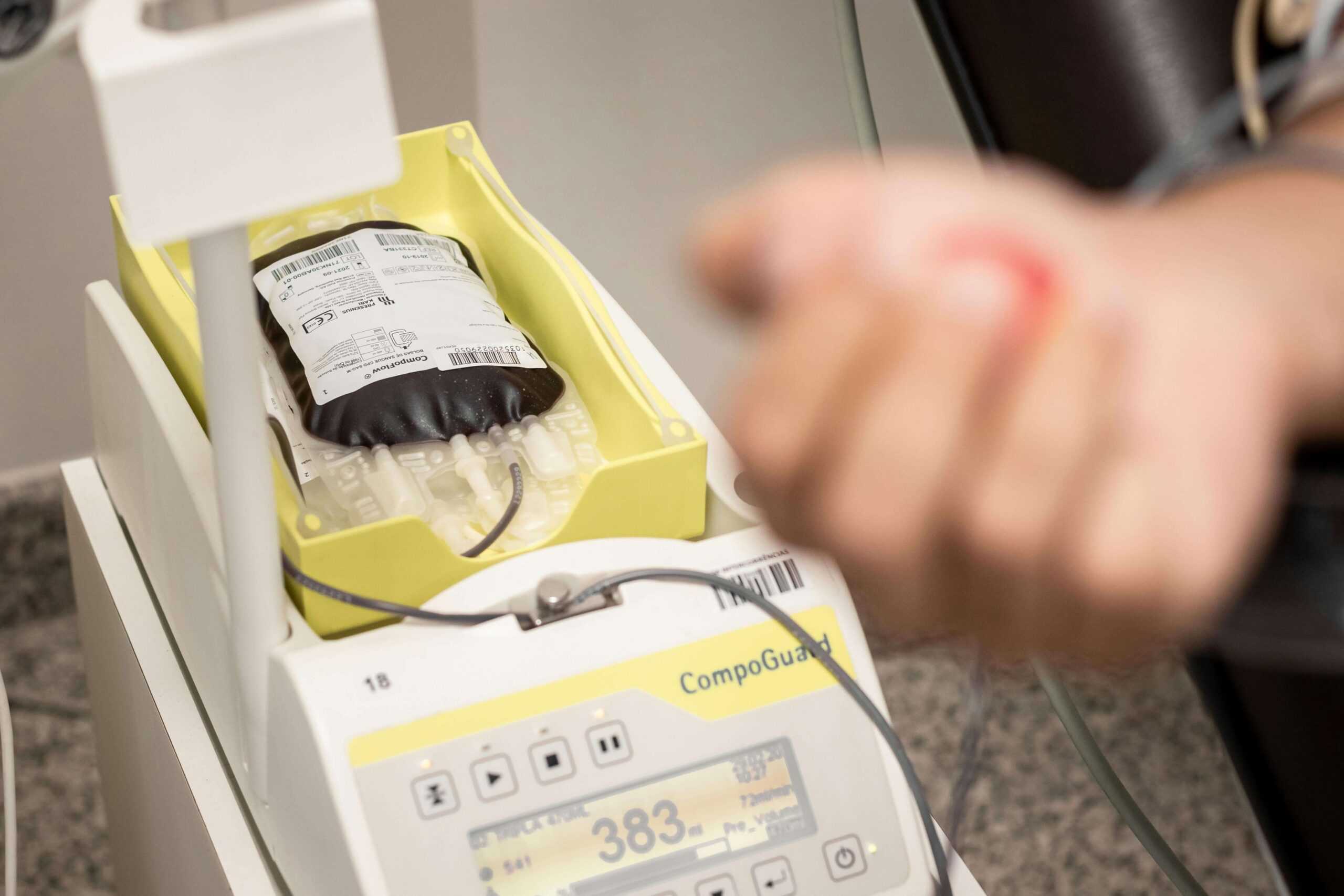
The Future of AI in Transfusion Medicine
As artificial intelligence continues to mature, its role in transfusion medicine is transitioning from supportive automation to proactive, intelligent healthcare management. The future promises a shift toward fully integrated digital ecosystems where machine learning models anticipate patient needs, optimize global blood supplies before shortages occur, and power autonomous blood banks. Therefore, by bridging cutting-edge data science with clinical workflows, next-generation AI technologies are set to make blood banking faster, safer
Predictive Blood Supply Management
Explain AI-powered forecasting for hospitals, emergencies, and seasonal demand.
Fully Automated Blood Banks and Smart Laboratories
Discuss robotics, automated testing, digital workflows, and intelligent laboratory management.
Emerging Innovations in AI-Driven Transfusion Medicine
Cover genomic compatibility matching, wearable health monitoring, precision medicine, and global blood network optimization.
Conclusion
Artificial Intelligence is reshaping transfusion medicine by making blood donation, testing, compatibility assessment, inventory management, and patient monitoring more accurate and efficient. AI-powered technologies help healthcare providers reduce transfusion risks, improve blood availability, and support data-driven clinical decisions. Although challenges such as implementation costs, cybersecurity, and ethical concerns remain, continued innovation will strengthen collaboration between healthcare professionals and intelligent systems. as hospitals and blood banks adopt AI-driven solutions, transfusion medicine will continue to advance toward safer, faster, and more personalized patient care.